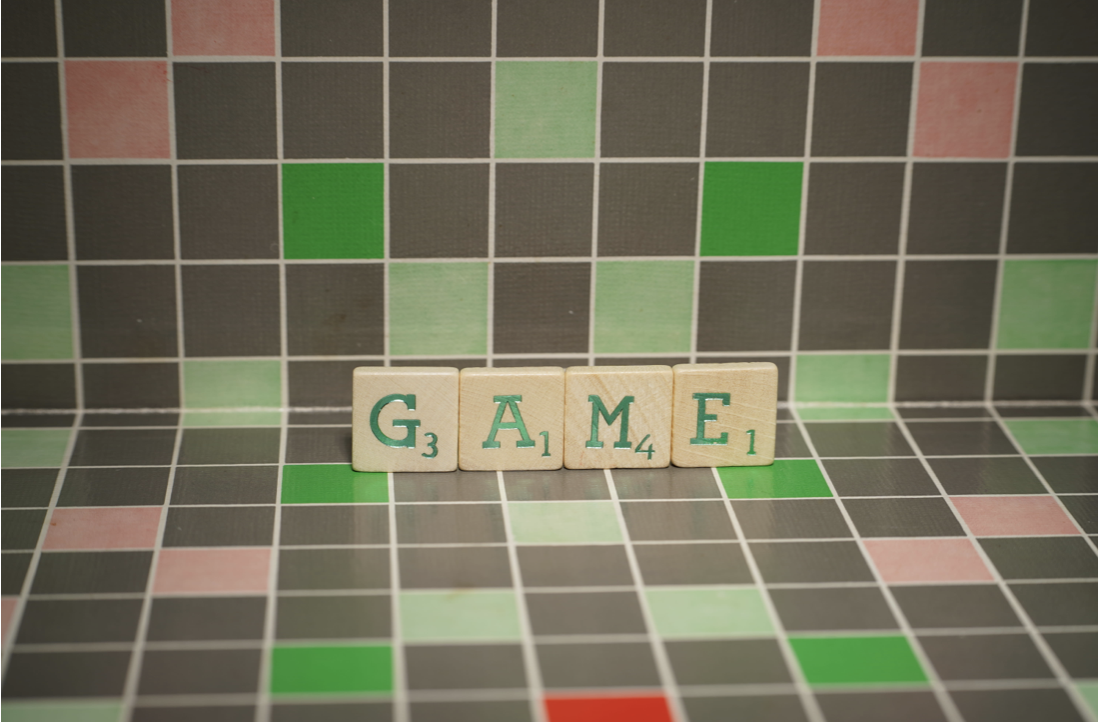
 Word games on vocabulary acquisition refer to the use of structured play activities to expand word knowledge through interaction, repetition, plus problem solving (crossword puzzles, anagram solvers, word search grids).
And word games on vocabulary acquisition strengthen language skills through active recall, pattern recognition, plus contextual exposure during gameplay. Repeated engagement with word challenges increases familiarity with spelling patterns, prefixes, suffixes, plus root forms. Problem-solving tasks require players to retrieve words from memory, which improves recall speed plus accuracy.
Context-based clues present words within meaningful situations, which deepens understanding beyond memorization. Immediate feedback corrects errors during play, which reinforces proper usage plus meaning. Progressive challenge levels introduce complex words, which expand vocabulary depth across different difficulty stages. Competitive elements motivate continued participation, which increases exposure to diverse word sets. Regular interaction builds stronger connections among meaning, structure, plus usage across different contexts. Structured gameplay supports consistent vocabulary growth through repeated practice plus varied word encounters.
How Word Games Enhance Vocabulary Acquisition and Retention?
Word games enhance vocabulary acquisition and retention through repeated exposure, active recall, plus contextual learning during structured play (crossword puzzles, anagram solvers, word search grids). Repeated exposure increases familiarity with word forms across multiple encounters, which strengthens recognition over time. Active recall requires the retrieval of words during gameplay, which improves memory strength plus recall speed. Contextual clues present words inside meaningful situations, which deepens understanding of definitions plus usage.
Immediate feedback corrects mistakes during play, which reinforces accurate spelling plus meaning. Pattern recognition develops through rearranging letters, which builds awareness of prefixes, suffixes, plus root structures. Difficulty progression introduces complex words, which expand vocabulary depth across different levels. Engagement during gameplay maintains focus, which supports consistent interaction with new words. Structured repetition strengthens long-term retention, which improves vocabulary accuracy across different language contexts.
Why are Word Games Effective for Vocabulary Acquisition?
Word games are effective for vocabulary acquisition because they combine repeated exposure, active recall, plus contextual learning within engaging tasks that reinforce memory during play (crossword puzzles, anagram challenges, word search grids). Repetition across multiple rounds increases familiarity with word forms, which strengthens recognition plus recall over time. Active recall occurs when players retrieve words from memory during puzzles, which improves retention strength plus retrieval speed.
Contextual clues present words inside meaningful situations, which deepens understanding of definitions plus usage. Immediate feedback corrects errors during gameplay, which reinforces accurate spelling plus meaning. Pattern recognition develops through rearranging letters, which builds awareness of prefixes, suffixes, plus root structures. Progressive difficulty introduces complex vocabulary, which expands word knowledge across different levels. Engagement during gameplay sustains attention, which supports consistent interaction with new words and strengthens long-term vocabulary retention.
Does Repetition in Word Games Support Vocabulary Acquisition?
Yes, repetition in word games supports vocabulary acquisition. Repeated exposure to the same words strengthens recognition, which improves memory retention during gameplay (crossword puzzles, anagram challenges, word search grids). Each encounter with a word reinforces its spelling, structure, plus meaning, which builds stronger mental connections. Recall tasks during repeated rounds require the retrieval of words from memory, which increases retrieval speed plus accuracy.
Familiarity develops as words appear across different puzzles, which deepens understanding of usage in varied contexts. Error correction during repeated attempts refines knowledge by replacing incorrect responses with accurate ones. Pattern recognition improves through repeated letter arrangements, which strengthens awareness of prefixes, suffixes, plus root forms. Consistent repetition during gameplay builds long-term retention, which supports reliable vocabulary recall across different language situations.
How do Digital Word Games Enhance Vocabulary Acquisition?
Digital word games enhance vocabulary acquisition through interactive gameplay, adaptive difficulty, plus real time feedback that reinforces learning during structured play (mobile word apps, online anagram solvers, timed word challenges). Interactive tasks require active recall of words, which strengthens memory through repeated retrieval during gameplay. Adaptive difficulty adjusts word complexity based on performance, which aligns challenges with the current vocabulary level.
Real-time feedback corrects errors immediately, which reinforces accurate spelling plus meaning. Visual and audio cues support recognition of words, which improves understanding across different formats. Context-based challenges present words within clues or sentences, which deepen comprehension beyond memorization. Progress tracking records performance data, which highlights strengths plus gaps in vocabulary knowledge. Continuous engagement across digital platforms increases exposure to diverse word sets, which expands vocabulary range plus recall accuracy.
Do Crossword Puzzles Reinforce Vocabulary Acquisition?
Yes, crossword puzzles reinforce vocabulary acquisition. Clue-based solving requires recall of word meanings, which strengthens memory through repeated retrieval during gameplay (definition clues, synonym prompts, fill-in-the-blank). Each solved entry reinforces spelling patterns, which improves recognition plus accuracy over time. Contextual clues connect words to meanings, which deepen understanding beyond isolated memorization.
Grid structure encourages pattern recognition, which builds awareness of prefixes, suffixes, plus root forms. Error correction occurs when incorrect entries conflict with crossing words, which refines accuracy through adjustment. Repeated exposure to varied clues introduces new vocabulary, which expands word knowledge across different topics. Regular puzzle solving builds stronger connections among meaning, structure, plus usage, which supports reliable vocabulary recall across different language situations.
How Unscramblex.me Makes Vocabulary Acquisition and Retention More Exciting?
Unscramblex.me makes vocabulary acquisition and retention more exciting through interactive word solving, pattern recognition, plus instant feedback during gameplay (unscrambling jumbled letters, forming valid words, and identifying hidden terms). Unscramblex.me presents scrambled inputs that require active recall, which strengthens memory through repeated word construction tasks. Pattern recognition improves as players rearrange letters into meaningful forms, which builds familiarity with prefixes, suffixes, plus root structures.
Immediate feedback corrects errors at each attempt, which reinforces accurate spelling plus word formation. Varied word lengths introduce new challenges, which expand vocabulary range across different difficulty levels. Repeated interaction with puzzles increases exposure to diverse word sets, which improves recognition plus recall accuracy. Structured gameplay connects meaning, spelling, plus usage through consistent practice across sessions. Regular engagement strengthens retention, which supports faster recall plus improved vocabulary use in different contexts. Consistent use of Unscramble Me builds stronger vocabulary knowledge plus long-term retention.
What are Examples of Word Games that Support Vocabulary Acquisition and Retention?
Examples of word games that support vocabulary acquisition and retention are structured activities that build recall, pattern recognition, plus contextual understanding during play (crossword puzzles, anagram solvers, word search games, tile placement games). Crossword puzzles use clue-based grids where players fill words that match definitions, which strengthens meaning recognition plus spelling accuracy. Crossword puzzles support solo or group play in print or digital formats, where intersecting words guide correct answers.
Anagram solvers present scrambled letters that players rearrange into valid words, which improves pattern recognition plus recall skills. Anagram games allow solo or group play in offline or online formats, where players form multiple words from a fixed letter set. Word search games require players to locate hidden words in a letter grid, which improves recognition plus visual scanning ability. Word search games suit solo players or small groups in print or digital formats, where words appear in different directions. Tile placement games involve forming words on a shared board using letter tiles, which develops vocabulary through strategic construction. Tile placement games require two or more players, where scoring depends on word length or letter value.
1. Word Search
Word Search is a grid-based puzzle where players locate hidden words arranged in different directions across a field of letters (horizontal, vertical, diagonal). Word Search is a visual scanning game that strengthens vocabulary through repeated exposure to word forms. Players search for listed words inside a letter grid, which improves recognition plus spelling familiarity. Solo play appears common, though group play supports timed challenges. Printed sheets and digital formats provide access across different settings. Regular interaction reinforces memory through repeated encounters with target words.
2. Wordwall
Wordwall is a digital platform where players engage in interactive vocabulary activities through game-based formats (matching, quizzes, sorting tasks). Wordwall is an activity-driven game that strengthens vocabulary through varied engagement methods. Players interact with customized word sets, which improves recall plus contextual understanding. Facilitators design tasks that align with learning goals, which support focused practice. Online access allows solo or group participation across devices. Immediate feedback reinforces correct word usage during gameplay.
3. Crossword
A crossword is a clue-based puzzle where players fill in intersecting words that match given hints (definitions, synonyms, general knowledge clues). Crossword is a logic-driven game that strengthens vocabulary through meaning association. Players solve clues to complete a grid, which improves recall plus reasoning skills. Solo play dominates, though group solving supports collaboration. Print and digital formats allow flexible access. Repeated solving builds familiarity with word meanings plus structures.
4. Scramble
Scramble is a word game where players rearrange mixed letters to form valid words (jumbled letters, fixed letter sets). Scramble is a pattern recognition game that strengthens vocabulary through letter arrangement tasks. Players analyze combinations to identify correct words, which improves recall plus spelling accuracy. Solo or group play appears in offline or online formats. Timed rounds increase challenge, which improves response speed. Frequent play reinforces familiarity with word structures.
5. Alphabet Soup / A to Z
Alphabet Soup or A to Z is a word generation game where players create words based on alphabetical or category rules (A to Z sequence, themed words). Alphabet Soup or A to Z is a recall-based game that strengthens vocabulary through wide word generation. Players produce words that match letter or category constraints, which improves flexibility in usage. Group play supports competition, though solo play remains possible. Offline settings appear common in classroom use. Repeated rounds expand vocabulary range across different categories.
6. Articulate
Articulate is a verbal description game where players explain words without stating the actual term, while teammates guess (descriptive clues, timed rounds). Articulate is a communication-based game that strengthens vocabulary through expressive language. Players describe words under time limits, which improves recall plus clarity of meaning. Group play remains required, which promotes interaction. Offline gameplay appears common. Repeated sessions improve descriptive ability plus word recall.
7. Just One
Just One is a cooperative guessing game where players provide single-word clues to help identify a hidden term (unique clues, duplicate removal). Just One is a collaborative game that strengthens vocabulary through association. Players write clues, then remove duplicates before revealing hints, which encourages creative thinking. Group play remains required, which supports teamwork. Offline gameplay dominates. Repeated play strengthens semantic connections among words.
8. Telephone Pictionary
Telephone Pictionary is a drawing and guessing game where players alternate between writing words and drawing interpretations (word to drawing, drawing to word). Telephone Pictionary is a transformation-based game that strengthens vocabulary through interpretation. Players pass drawings or words in sequence, which builds understanding of meaning across formats. Group play remains required, which encourages interaction. Offline settings appear common, though digital versions exist. Repeated play reinforces recognition plus meaning association.
9. Vocabulary Checkers
Vocabulary Checkers is a board game variation where movement depends on correct vocabulary answers (definition questions, word usage tasks). Vocabulary Checkers is a rule-based game that strengthens vocabulary through question-driven progress. Players answer prompts to move pieces, which improves recall plus understanding. Group play remains required, which promotes competition. Offline formats support classroom use. Repeated rounds reinforce memory plus correct usage.
10. You’re On a Roll
You’re On a Roll is a dice-based word game where players form words based on rolled letters or prompts (letter dice, category tasks). You’re On a Roll is a spontaneous generation game that strengthens vocabulary through quick recall. Players roll dice to determine letters, then create valid words within given limits. Group play supports competition, though solo play appears possible. Offline gameplay remains common. Repeated rounds improve recall speed plus vocabulary flexibility.
Do Crossword Puzzles Improve Vocabulary Acquisition and Retention?
Yes, crossword puzzles improve vocabulary acquisition and retention. Clue-based solving requires recall of word meanings, which strengthens memory through repeated retrieval during gameplay (definition clues, synonym prompts, fill-in-the-blank). Each solved entry reinforces spelling patterns, which improves recognition plus accuracy over time. Contextual clues connect words to meanings, which deepen understanding beyond isolated memorization.
Grid structure encourages pattern recognition, which builds awareness of prefixes, suffixes, plus root forms. Error correction occurs when incorrect entries conflict with crossing words, which refines accuracy through adjustment. Repeated exposure to varied clues introduces new vocabulary, which expands word knowledge across different topics. Regular puzzle solving strengthens connections among meaning, structure, plus usage, which supports reliable vocabulary recall across different language situations.
How do Digital Word Games Develop Vocabulary Acquisition and Retention?
Digital word games develop vocabulary acquisition and retention through interactive tasks, adaptive difficulty, plus immediate feedback that reinforce learning during gameplay (mobile word apps, online puzzles, timed challenges). Interactive tasks require active recall of words, which strengthens memory through repeated retrieval. Adaptive difficulty adjusts word complexity based on performance, which aligns challenges with the current vocabulary level. Immediate feedback corrects errors at once, which reinforces accurate spelling plus meaning.
Visual cues support recognition of word forms, which improves understanding across different formats. Context-based challenges present words within clues or sentences, which deepen comprehension beyond memorization. Progress tracking records performance data, which highlights strengths plus gaps in vocabulary knowledge. Regular interaction across digital platforms increases exposure to diverse word sets, which improves recall accuracy plus long term retention.
Can Group-Based Word Association Activities Enhance Vocabulary Acquisition and Retention?
Yes, group-based word association activities enhance vocabulary acquisition and retention. Shared interaction exposes participants to varied word choices, which expands vocabulary through collective input (association chains, category naming, rapid word linking). Association tasks require quick recall of related terms, which strengthens memory through repeated retrieval. Group responses introduce new words that do not appear in solo practice, which broadens the vocabulary range. Immediate feedback from peers clarifies meaning, which improves accuracy in word usage.
Repetition during rounds reinforces connections among related words, which strengthens semantic understanding. Social engagement maintains focus, which supports consistent participation across activities. Structured association exercises build stronger links among meaning, context, plus usage, which improves long-term vocabulary retention.
P.S. Before you zip off to your next Internet pit stop, check out these 2 game changers below - that could dramatically upscale your life.
1. Check Out My Book On Enjoying A Well-Lived Life: It’s called "Your To Die For Life: How to Maximize Joy and Minimize Regret Before Your Time Runs Out." Think of it as your life’s manual to cranking up the volume on joy, meaning, and connection. Learn more here.
2. Life Review Therapy - What if you could get a clear picture of where you are versus where you want to be, and find out exactly why you’re not there yet? That’s what Life Review Therapy is all about.. If you’re serious about transforming your life, let’s talk. Learn more HERE.
Think happier. Think calmer.
Think about subscribing for free weekly tools here.
No SPAM, ever! Read the Privacy Policy for more information.
One last step!
Please go to your inbox and click the confirmation link we just emailed you so you can start to get your free weekly NotSalmon Happiness Tools! Plus, you’ll immediately receive a chunklette of Karen’s bestselling Bounce Back Book!


