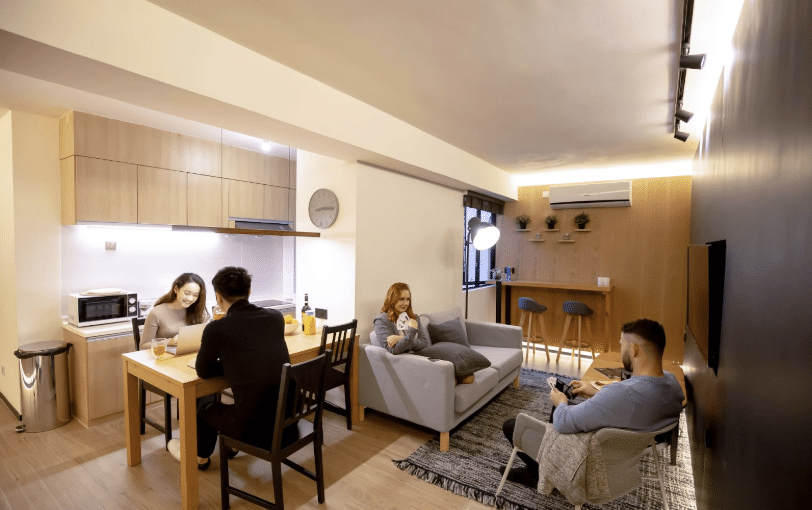
 Our way of life has changed drastically over the last few years. The epidemic has accelerated the growth of remote and hybrid work, changing how people choose to live. New living ideas, such as co-living spaces, have emerged in response to this reality and promote community and cooperation.
Even while these apartments give you the opportunity to live in a community, you may find it challenging to maintain privacy. This reality then raises the question of whether this is the best option for you. We’ll help you address this by helping you understand privacy in co-living spaces and deciding whether it fits your needs.
What is a Co-Living Apartment?
A co-living apartment is a cutting-edge housing type that offers a balance between independence and community by combining private living areas with shared social amenities. This apartment is a community-focused setting where tenants enjoy privacy in their personal rooms while participating in shared experiences through communal areas and planned events.
Kitchens, living rooms, offices, and outdoor spaces are examples of common facilities in this apartment. It helps to have a reliable property manager in San Antonio Texas, who schedules regular professional cleaning for common areas and addresses repair requests proactively. Although there are some similarities between coliving and regular roommate living, coliving stands out for its stronger sense of community and greater resource sharing. Unlike typical roommate arrangements, where such dynamics may be less prominent, coliving spaces run by professional companies foster social interaction and shared activities among residents. The thoughtful architecture of this apartment also promotes real-life social interactions.
Young renters moving to cities in search of employment prospects are a major factor in the growing popularity of co-living apartments. These people prefer to meet like-minded people and take advantage of an affordable, adaptable living arrangement. Co-living has emerged as a popular option for people seeking affordability and a sense of community in their new surroundings as cities continue to expand and housing needs change.
Understanding Privacy in Co-Living Spaces
House Rules
House rules are necessary for balancing community living with individual rights in co-living arrangements, particularly for property managers working with tenants. These rules are based on various worldwide guidelines as well as all applicable laws and ordinances that safeguard the tenant’s right to privacy.
In a co-living setting, individuals have a private bedroom and share common areas, which allows a degree of privacy and physical protection from strangers or the public in their own home. Everyone must respect others’ privacy. Do not enter anyone’s bedroom without asking, and you may also indicate you have “do not disturb” by closing your door. Landlords are required to provide reasonable notice before entering or accessing your unit, except in an emergency.
Quiet Hours
Quiet hours have been established in many cases, usually from 10 PM to 8 AM. During that time, residents should keep noise to a minimum to respect those trying to sleep, work, or study. The rule is that “quiet” means using as little noise as possible, and may also be modified for weekends. Violating this rule can lead to a conflict, though enforcing it is usually up to the rules and policies of each house in a co-living arrangement.
The quiet enjoyment agreement guarantees your rights to privacy and freedom from unreasonable disturbance, as well as having exclusive use of the rental property or unit, including in co-living. Excessive noise may violate your right to enjoy your property by intruding on your downtime. In effect, it would be equivalent to entering the property without the owner’s consent. The use of sound-reduction measures and clear house rules tends to create a balanced environment between the community and individuals sharing the house.
Lease Clauses that Protect Personal Space
A clear separation between private and shared spaces is necessary. The lease must indicate which rooms are private and not accessible to other tenants or to the landlord without permission. Entry rules for entering the landlord’s property must provide 24 – 48 hours’ notice for entry to conduct inspections or any other work that is not an emergency, to access only common areas in these apartments. Surveillance in any private area is not permitted, including video or audio surveillance in bedrooms and bathrooms, to prevent unauthorized surveillance.
To avoid interruptions, the lease should also include clauses for guests, such as the duration of their stay and the use of common areas. Additionally, creating a non-disclosure policy for a tenant’s personal information can help protect each tenant’s confidentiality. Lastly, they should establish a process for resolving privacy violations promptly to prevent them from escalating to eviction.
How Do Property Managers Help Balance Community and Privacy?
They can start with screening and matching. Property managers can carefully evaluate tenants’ lifestyles to ensure that all roommates live together harmoniously. They can do this by considering how much noise each room creates and how they use common space, without delving into any one tenant’s private information. Screening and matching come into play in reducing the risk of a tenant and their roommate mismatch, while enhancing the community aspect of the property by ensuring tenants have similar interests.
Property managers can also establish and enforce house rules to define quiet hours, limit guest access, and outline etiquette in common areas. Posting house rules in public places will help clarify mutual expectations among tenants. These rules also help protect each tenant’s personal downtime while providing opportunities for tenants to socialize in the designated communal areas.
In many cases, residents of co-living properties trust they’ll have shared spaces that facilitate gatherings, though arrangements certainly differ. By creating shared indoor and outdoor areas, property managers can attract co-living renters. By providing shared amenities, furniture, and décor, it is possible to ensure residents are comfortable and no single individual controls common areas.
Final Thoughts
Co-living is undoubtedly growing in popularity as more millennials and Gen Zers move into shared living spaces. This living arrangement is a distinctive and practical alternative to traditional renting, whether you’re a young professional, a digital nomad, or someone adjusting to the contemporary work-life dynamic.
Living in a co-living apartment is a highly personal choice. It boils down to asking yourself if you’re prepared to give up some privacy and space in exchange for the opportunity to experience community. Lastly, living in a co-living apartment requires patience, kindness, and responsibility.
P.S. Before you zip off to your next Internet pit stop, check out these 2 game changers below - that could dramatically upscale your life.
1. Check Out My Book On Enjoying A Well-Lived Life: It’s called "Your To Die For Life: How to Maximize Joy and Minimize Regret Before Your Time Runs Out." Think of it as your life’s manual to cranking up the volume on joy, meaning, and connection. Learn more here.
2. Life Review Therapy - What if you could get a clear picture of where you are versus where you want to be, and find out exactly why you’re not there yet? That’s what Life Review Therapy is all about.. If you’re serious about transforming your life, let’s talk. Learn more HERE.
Think happier. Think calmer.
Think about subscribing for free weekly tools here.
No SPAM, ever! Read the Privacy Policy for more information.
One last step!
Please go to your inbox and click the confirmation link we just emailed you so you can start to get your free weekly NotSalmon Happiness Tools! Plus, you’ll immediately receive a chunklette of Karen’s bestselling Bounce Back Book!


