Financial stability rarely happens by accident. Whether managing a household budget, saving for a child’s education, or expanding a small business, success depends on strategic planning and disciplined execution. Most people understand they should save more and spend less, yet few implement thorough strategies that address both immediate needs and future aspirations. The difference between those who achieve financial security and those who struggle often comes down to specific, actionable approaches that align daily decisions with long-term objectives.
Building a Strong Financial Foundation With Clear Goals and Budgets
Before pursuing complex investment vehicles or advanced wealth-building tactics, individuals must establish a solid financial framework anchored by well-defined objectives and realistic spending plans. Clear financial goals provide direction and motivation, whether saving for retirement, purchasing property, or funding education. These objectives should follow SMART criteria: specific, measurable, achievable, relevant, and time-bound.
A thorough budget serves as the roadmap to achieve these goals. It tracks income sources, categorizes expenses, and identifies opportunities to reduce unnecessary spending. Regular budget reviews enable adjustments based on changing circumstances or priorities. Emergency funds represent another critical foundation element, typically covering three to six months of living expenses. This cushion protects against unexpected setbacks while preventing reliance on high-interest debt during financial emergencies.
Managing Cash Flow and Creating an Emergency Fund
How can individuals transform their financial intentions into tangible results? Effective cash flow management serves as the bridge between planning and achievement. Tracking income against expenses reveals spending patterns and identifies areas for optimization. This awareness enables strategic adjustments that prevent overspending and accumulate savings.
An emergency fund represents financial security’s cornerstone, providing protection against unexpected expenses or income disruption. Financial experts recommend maintaining three to six months of essential living expenses in accessible accounts. This buffer prevents debt accumulation during crises and eliminates the need to liquidate long-term investments prematurely.
Building this fund requires consistent contributions, even small amounts compound considerably over time. Automating transfers from checking to savings accounts ensures regular deposits without requiring ongoing decision-making. This systematic approach transforms emergency preparedness from aspiration into reality.
Reducing Debt While Improving Saving and Investing Habits
While many perceive debt reduction and wealth building as competing priorities, strategic financial management enables simultaneous progress on both fronts. The hybrid approach involves allocating resources proportionally: directing minimum payments toward all debts while channeling additional funds toward high-interest obligations first, then gradually increasing retirement contributions as debt decreases.
Automating savings guarantees consistency regardless of debt repayment intensity. Even modest contributions to tax-advantaged accounts like 401(k)s or IRAs compound noticeably over time. Meanwhile, the debt avalanche method, targeting highest-interest debts while maintaining minimum payments elsewhere, minimizes total interest paid.
Behavioral adjustments amplify results. Redirecting windfalls toward debt principal accelerates elimination timelines. Simultaneously, reducing discretionary expenses creates surplus capital for both debt reduction and investment accounts, establishing sustainable financial momentum that persists beyond debt freedom.
Planning for Major Family Expenses and Long-Term Financial Security
Families managing competing financial priorities must balance immediate needs against future obligations through structured expense forecasting. Major expenditures including education costs, home purchases, and healthcare require dedicated planning horizons spanning years or decades.
Establishing separate savings vehicles for distinct goals prevents fund commingling and maintains accountability. Education funding demands early intervention, with 529 plans offering tax-advantaged growth for qualified expenses. Home acquisition necessitates down payment accumulation alongside credit score optimization.
Emergency reserves covering six months of expenses provide buffers against income disruption or unexpected medical costs. Long-term security requires coordinated retirement planning, appropriate insurance coverage, and estate documentation.
Regularly reviewing beneficiary designations, updating wills, and establishing powers of attorney protects family interests. Asset allocation should reflect risk tolerance while adjusting for changing life stages and economic conditions.
Using Commercial Loans to Support Responsible Business Growth
Beyond personal financial management, business owners face distinct funding challenges when seeking to expand operations or capitalize on market opportunities. Commercial loans provide structured capital access for equipment purchases, inventory expansion, real estate acquisition, or operational scaling. Responsible borrowing requires careful evaluation of loan terms, interest rates, and repayment schedules against projected revenue growth.
Business owners should assess their debt-to-income ratio and maintain strong credit profiles before applying. Lenders typically examine business financial statements, cash flow projections, and collateral value. Strategic loan utilization focuses on investments generating returns exceeding borrowing costs.
Different commercial loan types serve specific purposes: term loans for long-term investments, lines of credit for working capital, and SBA loans offering favorable terms for qualifying small businesses. Prudent business owners align borrowing decisions with concrete growth plans rather than speculative ventures.
Balancing Business Finances With Personal Wealth-Building Goals
Many entrepreneurs struggle to separate business financial obligations from personal wealth accumulation, often reinvesting every available dollar into their companies at the expense of retirement savings and personal asset diversification.
Establishing clear boundaries between business and personal finances requires systematic planning. Business owners should pay themselves market-rate salaries and contribute consistently to retirement accounts, treating personal wealth-building as non-negotiable operating expenses.
Setting specific reinvestment limits, such as capping business reinvestment at 70% of profits, ensures personal financial goals receive attention. Diversification protects against business failure by building assets outside the company through index funds, real estate, or other investments. Regular financial reviews with advisors help maintain this balance, adjusting allocations as the business matures and personal wealth objectives evolve.
Reviewing Your Financial Strategy as Income Needs and Priorities Change
As life circumstances evolve, financial strategies must adapt to reflect shifting income patterns and changing priorities. Regular financial reviews enable individuals to identify gaps between current plans and future objectives, ensuring resources align with emerging needs. Income fluctuations from career changes, business expansion, or retirement necessitate adjustments to savings rates, investment allocations, and risk tolerance. Major life events, marriage, children, aging parents, or health changes, fundamentally alter financial priorities and require strategic recalibration.
Quarterly or annual assessments provide opportunities to rebalance portfolios, update insurance coverage, and revise estate plans. Business owners must simultaneously evaluate how enterprise performance affects personal wealth accumulation. Working with financial advisors during these reviews helps maintain objective perspectives and identify optimization opportunities. Proactive strategy adjustments prevent reactive decision-making during crises, supporting long-term financial stability.
P.S. Before you zip off to your next Internet pit stop, check out these 2 game changers below - that could dramatically upscale your life.
1. Check Out My Book On Enjoying A Well-Lived Life: It’s called "Your To Die For Life: How to Maximize Joy and Minimize Regret Before Your Time Runs Out." Think of it as your life’s manual to cranking up the volume on joy, meaning, and connection. Learn more here.
2. Life Review Therapy - What if you could get a clear picture of where you are versus where you want to be, and find out exactly why you’re not there yet? That’s what Life Review Therapy is all about.. If you’re serious about transforming your life, let’s talk. Learn more HERE.
Think happier. Think calmer.
Think about subscribing for free weekly tools here.
No SPAM, ever! Read the Privacy Policy for more information.
One last step!
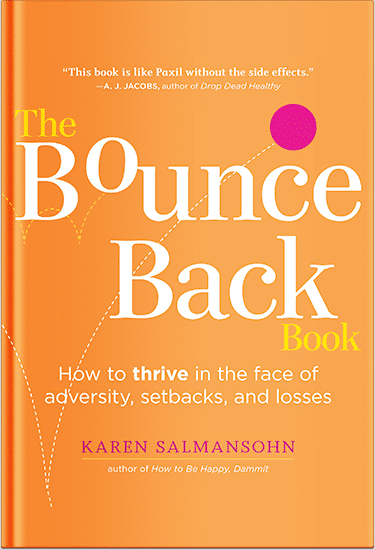
Please go to your inbox and click the confirmation link we just emailed you so you can start to get your free weekly NotSalmon Happiness Tools! Plus, you’ll immediately receive a chunklette of Karen’s bestselling Bounce Back Book!