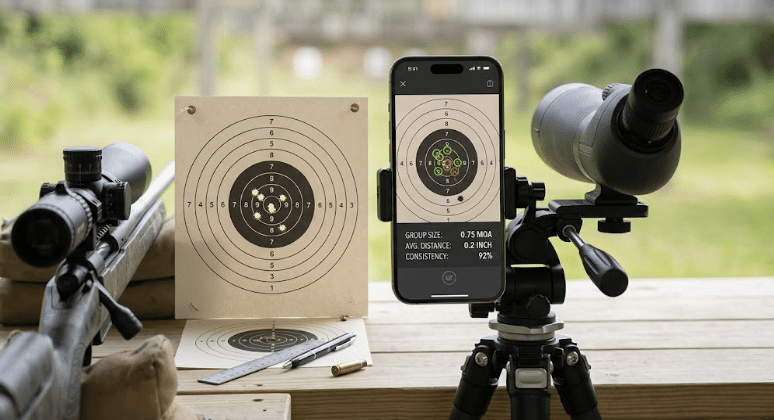
 Each unhit shot conveys a tale, yet uncovering the true cause is challenging. Shot analysis tools can help shooters spot their errors by measuring group size, point of impact, and consistency more accurately. They give clear, factual information, not speculation.
According to the report, practicing shot analysis consistently is a vital element of refining skills. That’s why you can use a free shot group analyzer that allows you to check targets. A digital method is a quicker and more reliable tool for this purpose.
Objective of This Blog
This blog explains how a shot analysis tool helps identify common shooting mistakes more quickly. It also covers how digital target analysis improves decision-making, tracks progress, and supports better practice sessions.
Key Takeaways
- Digital target analysis finds shooting errors much faster than manual measurements.
- Objective data takes the guesswork out of practice sessions.
- Tracking progress is easier if you measure each shot the same way.
- Backup tools offer different perspectives for overall accuracy.
- Frequent analysis teaches shooters good habits and allows for educated changes.
Table of Contents
- How a Shot Analysis Tool Works
- Common Shooting Mistakes It Can Detect
- How Target Shooting Analysis Improves Practice
- Why Data Leads to Better Decisions
- How Ballistic Analysis Helps You Understand Every Shot
- Improve Precision With a Bullet Drop Calculator
- Track Long-Term Shooting Performance
- Take the Next Step Toward Better Accuracy
- Frequently Asked Questions
How a Shot Analysis Tool Works
Modern software transforms the target image into beneficial performance information. Rather than using rulers or making calculations by hand, the software computes shot placement, group size, and other key statistics in a matter of seconds.
Most digital platforms follow a simple process:
- Upload a clear image of the target.
- Mark or confirm the bullet holes.
- Let the software calculate measurements automatically.
- Review the results and compare previous sessions.
This process reduces human error and provides consistent results across different practice sessions. More importantly, it helps shooters focus on improvement instead of spending valuable time measuring paper targets, which over time is what actually moves shooting performance forward.
Common Shooting Mistakes It Can Detect
Not every inaccurate shot comes from poor equipment. In many cases, small technique errors have a greater impact than expected. Digital analysis helps reveal patterns that may otherwise go unnoticed. Left unaddressed, these small errors can quietly cap a shooter’s overall shooting performance for months without anyone noticing.
Some of the most common mistakes include:
- Unpredictable pull causing shots to move left and right.
- Poor breathing control that creates vertical spread.
- Unequal grip pressure also affects the consistency of the shot.
- Tensing up before you shoot.
- Incorrect sight alignment or optics adjustments.
When these patterns appear repeatedly, shooters can adjust their training based on real evidence rather than assumptions. Some of them, like a wide vertical spread, are worth checking against basic ballistic analysis before assuming it’s purely a technique problem. That leads to more effective practice and better results over time.
How Target Shooting Analysis Improves Practice
Simply firing more rounds does not guarantee improvement. Quality feedback matters just as much as practice volume. That is where this kind of review becomes valuable, since it lets shooters compare shot groups from different sessions, measure progress with consistent data, and catch recurring errors quickly, all before the next practice session even begins.
Instead of wondering whether a change worked, shooters can review measurable results and see the difference immediately.
Why Data Leads to Better Decisions
Every target holds valuable information, but only if it is read properly. Digital instruments turn raw shot placement into actionable information that enables better training decisions. When combined with instruments such as a bullet drop calculator, this information can provide shooters with an enhanced view prior to pulling the trigger.
Correct readings also counteract bias. Instead of having to take a session based on feel, shooters have objective data to know what transpired accurately. It makes practice more efficient, and helps build confidence with each session.
Whether someone is practicing regularly or preparing for competitive shooting, faster feedback creates more opportunities to improve. This is really the point of target shooting analysis as a habit, not a one-off check. The next step is understanding how advanced measurements can provide even deeper insights into accuracy and consistency.
How Ballistic Analysis Helps You Understand Every Shot
Every bullet travels along a trajectory from the gun barrel to the target. Slight variations in distance, speed, or atmospheric conditions can affect its point of impact. That’s why a good part of reading shooting results comprehensively is knowing this side of things.
Rather than examining the point of final impact, it helps shooters analyze the influences on accuracy prior to and subsequent to the firing event. When coupled with electronic target scoring, the information has a somewhat different context for shot placement, session-to-session adjustments, and identification of repeating patterns.
Using measured data instead of assumptions helps shooters make smarter decisions every time they train.
Improve Precision With a Bullet Drop Calculator
Gravity impacts every bullet once it flies from its barrel. The bullet drops gradually as the distance grows longer, so with good hold over, you can adjust shooting quite well.
This type of calculator uses velocity, ballistic coefficient, and zero distance to calculate bullet drop at distance. This makes shooters ready prior to the shot as opposed to correcting errors after the fact. When combined with target size, it allows shooters to make precise sight adjustments, minimize wasted time dialling and gain more confidence prior to taking long shots.
Having reliable calculations alongside measured target data creates a more complete picture of every shooting session.
Track Long-Term Shooting Performance
One practice session provides useful information. Multiple sessions reveal progress.
Monitoring these numbers over weeks or months helps shooters understand whether their training methods are producing consistent improvements. Digital records make it easier to compare targets without relying on memory, and reviewing that history alongside basic ballistic analysis of each load shows more clearly whether a change actually worked.
Long-term monitoring might show smaller and more consistent shot groups, better trigger control as time passes, enhanced zero verification, and higher consistency across various ranges. This feedback could help a shooter to concentrate on areas that require further work, while also acknowledging quantifiable progress.
Take the Next Step Toward Better Accuracy
Improving shot precision is not just about shooting more rounds. It’s about having a reason for why each shot touches where it does. Robust measurements make for clear answers, leading to more productive practices. A good shot analysis tool simplifies target evaluation, reduces manual work, and helps shooters focus on meaningful improvement.
For those shooters who want to be more efficient in their training, ApexLoad provides the most advanced solutions for target measurement, streamlining digital workflows and bringing dependable results all from a user-friendly platform.
Check out their products to take a closer look at your targets with more confidence and keep getting better every time you shoot.
Frequently Asked Questions
1. How does a shot analysis tool improve training accuracy?
A digital tool measures shot placement with uniform accuracy rather than subjective approximations. This enables you to detect small mistakes, to compare practices, and to act knowing that what you have is solid information.
2. Why is ballistic analysis useful during practice?
It describes bullet behavior at various distances. Knowledge of these aspects enables the shooters to make more accurate interpretations of the results on the targets and to make smarter decisions at the range before the following session.
- When should you use a bullet drop calculator?
Use it before shooting at longer distances or when changing ammunition. It provides estimated drop values, helping you adjust sights and reduce unnecessary trial and error.
4. What makes target shooting analysis different from manual measurement?
Digital analysis produces consistent results more quickly. It minimizes human error, so shooters can more fairly compare targets and more easily pinpoint performance trends.
5. How can you measure long-term shooting performance?
Record your targets from each session and look at them three times. Tracking performance with consistent measurements over a period of time helps identify areas where you are improving, where you continue to make similar mistakes, and where you need to focus your practice in the future.
P.S. Before you zip off to your next Internet pit stop, check out these 2 game changers below - that could dramatically upscale your life.
1. Check Out My Book On Enjoying A Well-Lived Life: It’s called "Your To Die For Life: How to Maximize Joy and Minimize Regret Before Your Time Runs Out." Think of it as your life’s manual to cranking up the volume on joy, meaning, and connection. Learn more here.
2. Life Review Therapy - What if you could get a clear picture of where you are versus where you want to be, and find out exactly why you’re not there yet? That’s what Life Review Therapy is all about.. If you’re serious about transforming your life, let’s talk. Learn more HERE.
Think happier. Think calmer.
Think about subscribing for free weekly tools here.
No SPAM, ever! Read the Privacy Policy for more information.
One last step!
Please go to your inbox and click the confirmation link we just emailed you so you can start to get your free weekly NotSalmon Happiness Tools! Plus, you’ll immediately receive a chunklette of Karen’s bestselling Bounce Back Book!