 Boost productivity at work by staying focused with time blocking, minimizing distractions, prioritizing tasks, and building consistent daily work habits.
Focus is a limited biological resource. The prefrontal cortex, the brain region responsible for attention, planning, and decision-making, fatigues under sustained demand. It was not designed to operate continuously for 8 or 10 hours. It was designed for bursts of concentrated effort followed by recovery. Treating it otherwise produces diminishing returns that most knowledge workers recognize but rarely address. The strategies that sustain focus and improve output are not complicated. They are structural. They involve managing energy, environment, nutrition, and timing with the same intentionality that professionals bring to their actual work.
Work in Focused Blocks
The brain operates in ultradian rhythms, natural cycles of roughly 90 to 120 minutes of heightened alertness followed by 20 to 30 minutes of reduced capacity. Aligning work sessions with these cycles produces more output than grinding through fatigue. Set a timer for 60 to 90 minutes. Work on a single task during that window. When the timer ends, step away. Walk. Stretch. Let the prefrontal cortex recover before beginning the next block.
Research on focus duration confirms that concentrating for extended periods without breaks exhausts the brain’s attention circuits and produces errors that cost more time than the break would have. The worker who takes structured breaks outperforms the one who pushes through without stopping. The difference is not willpower. It is neurochemistry.
Eliminate Task Switching
Multitasking is a productivity myth. The brain does not perform two cognitive tasks simultaneously. It switches between them rapidly, and each switch carries a cost. Studies estimate that task switching wastes up to 40% of productive time in a typical workday. The switching cost includes the time to disengage from one task, reorient to the next, and reach the depth of focus the previous task required.
Email is the primary offender. Checking messages between tasks feels efficient. It is not. Each glance at the inbox introduces new information that the brain processes even after you return to the original work. Close the inbox during focused blocks. Batch email into 2 or 3 dedicated windows per day. The messages will still be there. The focus will not.
Feed the Brain Correctly
Cognitive performance depends on stable glucose delivery, adequate hydration, and specific micronutrients. A high-sugar breakfast produces a blood glucose spike followed by a crash that arrives mid-morning, exactly when most professionals need peak focus. A breakfast built on protein, complex carbohydrates, and healthy fats sustains glucose release over 3 to 4 hours without the crash.
Omega-3 fatty acids from fish, walnuts, and flaxseed support neuronal membrane function. B vitamins and choline contribute to neurotransmitter synthesis. Caffeine improves alertness in moderate doses but creates dependency and disrupts sleep at higher intake. Pairing caffeine with L-theanine produces calmer focus without the jitteriness that coffee alone can cause. Products like Neuro Gum deliver this combination in a portable format designed for use between meals or during focused work blocks when a full snack would interrupt the flow.
Protect Sleep
Sleep deprivation is the single largest preventable drain on workplace focus. One night of poor sleep reduces attention, working memory, and processing speed by measurable margins. Chronic sleep restriction, sleeping 6 hours or less per night for consecutive weeks, produces cumulative cognitive impairment equivalent to staying awake for 48 hours straight. The impaired individual does not perceive the full extent of the decline, which makes it more dangerous than acute fatigue. People running on 5 or 6 hours of sleep routinely overestimate their own performance. Objective testing reveals deficits they cannot feel.
The brain consolidates learning and clears metabolic waste during deep sleep. Cutting sleep short interrupts both processes. Protecting 7 to 9 hours per night is not optional for sustained high performance. It is a prerequisite. No amount of caffeine or scheduling optimization compensates for a brain running on insufficient rest.
Move During the Day
Physical activity increases blood flow to the brain, elevates neurotransmitter levels, and reduces the cortisol that accumulates during prolonged sedentary work. A 10-minute walk between focus blocks restores attention more effectively than scrolling a phone. Exercise does not need to be intense to produce cognitive benefits. Even mild movement, standing, stretching, or walking to a different room, interrupts the physiological stagnation that sitting produces and resets the brain’s readiness for the next task.
Workers who incorporate brief physical movement into their daily routines report lower stress and higher sustained concentration across the workday compared to those who remain seated for the full duration. The return on a 10-minute walk exceeds the return on 10 additional minutes of unfocused screen time.
Control Your Environment
Open offices increase ambient noise and visual distraction. Both reduce the brain’s ability to maintain deep focus. Noise-canceling headphones, designated quiet hours, or relocation to a private space during focus blocks reduce interruptions that each take 20 or more minutes to recover from.
Visual clutter on the desk or screen competes for attentional resources. A clean workspace does not guarantee focus, but a cluttered one actively undermines it. Close unnecessary browser tabs. Silence notification badges. Remove objects from the desk that are unrelated to the current task. Each removed distraction is a small reduction in the cognitive load competing with the work. The cumulative effect of 5 or 6 small reductions adds up to a meaningful increase in available mental health bandwidth. Environmental design is a form of productivity engineering that costs nothing and requires no willpower to maintain once implemented.
Set Clear Priorities Each Day
Decision fatigue accumulates throughout the day. Every choice, no matter how small, draws from the same finite pool of mental energy that focus requires. Starting the day by identifying 2 to 3 high-priority tasks and committing to completing them during your peak alertness hours prevents the drift that comes from an undefined to-do list.
The morning hours typically represent the highest-quality focus window for most people. Scheduling demanding cognitive work in that window and reserving routine tasks for the afternoon aligns effort with biological capacity. The schedule reflects the brain’s limitations rather than fighting them. Reserve administrative tasks, email, scheduling, and routine correspondence for the afternoon when focused capacity has naturally declined. This ordering extracts maximum value from the hours when the brain is sharpest.
Consistency Over Intensity
Productivity is not produced by occasional bursts of extreme effort. It is produced by consistent, sustainable routines executed day after day. The strategies here, focused blocks, single-tasking, nutrition, sleep, movement, and environmental control, are not dramatic interventions. They are structural adjustments that align the way you work with the way the brain actually functions. The workers who sustain high output over the years are not working harder. They are working in rhythm with their biology. The brain rewards structure. Give it structure, and it performs. Overload it, and it shuts down. The choice between those outcomes is not talent. It is designed.
P.S. Before you zip off to your next Internet pit stop, check out these 2 game changers below - that could dramatically upscale your life.
1. Check Out My Book On Enjoying A Well-Lived Life: It’s called "Your To Die For Life: How to Maximize Joy and Minimize Regret Before Your Time Runs Out." Think of it as your life’s manual to cranking up the volume on joy, meaning, and connection. Learn more here.
2. Life Review Therapy - What if you could get a clear picture of where you are versus where you want to be, and find out exactly why you’re not there yet? That’s what Life Review Therapy is all about.. If you’re serious about transforming your life, let’s talk. Learn more HERE.
Think happier. Think calmer.
Think about subscribing for free weekly tools here.
No SPAM, ever! Read the Privacy Policy for more information.
One last step!
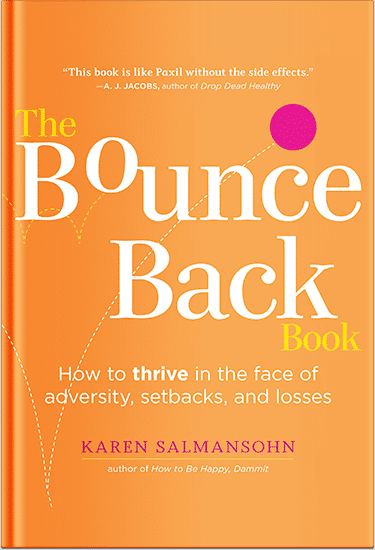
Please go to your inbox and click the confirmation link we just emailed you so you can start to get your free weekly NotSalmon Happiness Tools! Plus, you’ll immediately receive a chunklette of Karen’s bestselling Bounce Back Book!