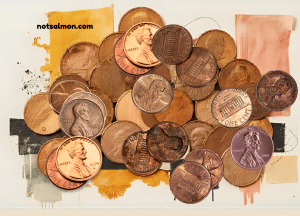
 You probably walk past pennies on the sidewalk without giving them a second thought, right? Most people do.
But here’s something that might change how you see those little copper coins: America’s oldest pennies have some absolutely incredible stories hidden in them. We’re talking about tales of wartime metal shortages, artistic controversies that got people genuinely fired up, and minting mistakes that accidentally created some of the most valuable coins in existence.
From those rough colonial coppers that barely look like real coins to iconic designs that basically built the foundation of American coin collecting, these pennies are like tiny history books. Each one gives you a glimpse into what was happening in the country when it was made.
And then you’ve got modern legends like the 1955 double die penny, which perfectly shows how even the smallest coins can end up with the biggest stories.
Once you start learning about the drama behind these things, you’ll never look at pocket change the same way again.
When America First Tried Making Its Own Pennies
So imagine you’re a brand new country in 1793, and you’re trying to figure out how to make money that actually looks official. America’s very first attempt at a penny was called the Chain Cent, and man, did they miss the mark with that one.
The designers thought putting a chain on the back would be this great symbol of how all the states were linked together. Sounds nice in theory, except when regular people saw it, their first thought was slavery chains. Not exactly the message you want your new nation’s currency to send out into the world.
The public reaction was so negative they basically had to start over. They moved on to Liberty Cap designs and then Draped Bust cents, which did a much better job of capturing what Americans wanted to see representing their country.
These early copper cents are incredibly scarce today because most people back then weren’t thinking about saving coins for future generations. They were just trying to get by day to day. The few that survived are worth serious money now, not just because they’re rare, but because they represent America’s first real attempts at creating a national identity through coinage.
The Growing Pains of Early 19th Century Pennies
As America moved into the 1800s, the penny designs started getting more sophisticated. The Classic Head and Coronet Large Cents showed that the country was maturing and getting better at this whole coin-making business. But behind the scenes, there was constant drama with metal shortages and budget problems that made coin production really unpredictable.
Some years the mint would produce tons of pennies, other years hardly any, all depending on whether they could get copper and whether Congress actually funded the operation. This created these weird gaps in production that collectors today find fascinating.
Take something like an 1815 penny. They made very few that year because the country was still recovering financially from the War of 1812. Now those coins are incredibly valuable just because of the historical timing. It’s amazing how economic problems from over 200 years ago still drive what collectors are willing to pay today.
Each date tells its own story about what America was dealing with politically and economically at that exact moment in time.
The Indian Head Penny Captures a Complicated Era
When 1859 rolled around, they completely redesigned the penny right as America was expanding westward and dealing with complex relationships with Native American tribes. The Indian Head penny became this interesting mix of trying to honor Native American culture while also celebrating national expansion.
The artistic details on these coins are actually pretty remarkable when you examine them closely. The feathered headdress design, the way they portrayed Liberty, even the oak wreath on the reverse all had symbolic meanings that reflected how Americans saw themselves during this turbulent period.
Certain Indian Head pennies are worth incredible amounts today. A nice 1877 can sell for thousands of dollars because they made so few that year due to economic problems. An 1909-S Indian Head is another major rarity that serious collectors chase.
These coins basically bridge the gap between early America and the modern era, which makes them really appealing to people who want to own a piece of that transitional time in our history.
Lincoln Pennies and a Design Controversy
The year 1909 was huge for American coinage because they decided to completely redesign the penny for Abraham Lincoln’s 100th birthday. This was actually groundbreaking since it marked the first time a real historical figure appeared on regular U.S. circulation coins.
But then this whole controversy erupted over the designer’s initials. Victor David Brenner put “VDB” pretty prominently on the reverse of the early 1909 pennies, and the public got really upset about it. People felt like he was promoting himself too much on what should be a tribute to Lincoln.
The outcry was so intense that the mint removed the initials partway through 1909, creating two distinct varieties. This created the famous 1909-S VDB penny, which is now one of the most sought-after coins in American numismatics. Some examples sell for thousands of dollars just because of that initial controversy.
The wheat penny design that followed lasted all the way until 1958 and became the gateway drug for millions of Americans getting into coin collecting. Almost everyone who’s ever been interested in coins has searched through wheat pennies at some point.
Tiny Coins with Enormous Stories
America’s oldest pennies really are like tiny storytellers. Each one offers you a window into the history, politics, and artistic sensibilities of whatever era it came from. Whether you’re hunting for a colonial copper that somehow survived from the 1700s or hoping to stumble across that elusive 1955 double die penny in a roll of old cents, these coins connect you to literally centuries of American history.
The stories behind these pennies show that coin collecting isn’t just about finding valuable things, though that’s certainly part of the fun. It’s about understanding how our money reflects who we were as a nation at different points in time. Every design change, every metal shortage, every mint error tells part of America’s larger story.
So next time you see an old penny, take a moment to really look at it. Check the date, examine the design, think about what was happening in America when it was made. You might be holding a piece of history that’s worth way more than one cent, both in dollars and in the stories it carries. The legacy of American coinage is literally sitting there in your pocket change, just waiting to be discovered and appreciated.
P.S. Before you zip off to your next Internet pit stop, check out these 2 game changers below - that could dramatically upscale your life.
1. Check Out My Book On Enjoying A Well-Lived Life: It’s called "Your To Die For Life: How to Maximize Joy and Minimize Regret Before Your Time Runs Out." Think of it as your life’s manual to cranking up the volume on joy, meaning, and connection. Learn more here.
2. Life Review Therapy - What if you could get a clear picture of where you are versus where you want to be, and find out exactly why you’re not there yet? That’s what Life Review Therapy is all about.. If you’re serious about transforming your life, let’s talk. Learn more HERE.
Think happier. Think calmer.
Think about subscribing for free weekly tools here.
No SPAM, ever! Read the Privacy Policy for more information.
One last step!
Please go to your inbox and click the confirmation link we just emailed you so you can start to get your free weekly NotSalmon Happiness Tools! Plus, you’ll immediately receive a chunklette of Karen’s bestselling Bounce Back Book!


