 Running a business today involves new challenges beyond just market changes and competition. Environmental risks, like extreme weather or new regulations, can disrupt how you operate, damage your reputation, and hurt your profits. To prepare your business for the future, you need to actively find, manage, and reduce these threats before they become major problems.
Identifying Potential Environmental Threats
First, you need to understand the risks. Environmental risks generally fall into two categories: physical and transitional. Physical risks are easy to spot; they include events like floods, wildfires, hurricanes, and droughts that can directly damage property and stop operations. Transitional risks are less obvious. They come from society moving towards a more sustainable economy. This can mean new carbon taxes, stricter emissions rules, customers preferring green products, or reputational damage if your environmental performance is poor.
To start, do a thorough risk assessment. Where are your facilities located? Are those areas prone to specific climate events? Look at your operations and pinpoint any weaknesses that environmental factors could exploit.
Proactive Risk Management Strategies
Once you know your risks, you can’t just hope for the best. A proactive risk management approach means getting ready for disruptions before they happen. This involves creating detailed backup plans for different situations. For example, what would you do if a key facility floods, or if a new environmental rule makes your current processes illegal?
Set up emergency response plans and make sure your team knows how to follow them. This might include having backup power or setting up remote work options for your staff. Review and update these plans regularly as things change. It’s much cheaper to prevent problems than to deal with a disaster after it strikes.
Adopting Advanced Remediation Solutions
For many industries, environmental risk comes directly from operational byproducts like industrial emissions or wastewater. Investing in advanced technology to manage these outputs isn’t just about following rules; it’s key to building resilience. Modern solutions can turn a potential problem into a manageable process, often with surprising efficiency.
For instance, specialized sectors need very specific solutions. The complex challenges of pharmaceutical industry wastewater treatment require sophisticated systems to handle unique chemical compounds safely and effectively. By using the right technology, businesses can meet or exceed regulations, protecting both the environment and their right to operate. This proactive investment helps avoid fines, shutdowns, and long-term damage to their reputation.
Building a Resilient Supply Chain
Your business is only as strong as its weakest point, and that often includes your supply chain. If just one supplier is hit by an environmental event, your whole operation could stop. Building resilience means looking strategically at every partner you rely on. Start by having multiple suppliers so you don’t depend on just one company or geographic area.
If possible, try to localize parts of your supply chain. This reduces reliance on transportation and potential disruptions across borders. It’s also important to check your partners. Ask them about their own environmental risk management plans. Do they have backup plans? Choosing suppliers who are also preparing for the future makes your own business stronger against shocks.
Integrating Sustainability into Core Strategy
Ultimately, the best way to future-proof your business is to stop seeing environmental issues as a separate task and instead make sustainability part of your core strategy. This change in thinking turns risk management from a defensive move into a source of innovation and competitive edge. Focusing strongly on sustainability risk management can make things more efficient, reduce waste, and cut operating costs.
A commitment to sustainability also improves your brand’s reputation, attracting both customers and skilled employees who want to work with responsible companies. When sustainability is built into your company’s foundation, you’re not just avoiding risks; you’re building a stronger, more adaptable, and more valuable business for the long run.
Protecting your business from environmental risks isn’t a one-time task; it’s an ongoing commitment. Taking these steps helps you build a more resilient organization ready to succeed no matter what challenges the future brings.
P.S. Before you zip off to your next Internet pit stop, check out these 2 game changers below - that could dramatically upscale your life.
1. Check Out My Book On Enjoying A Well-Lived Life: It’s called "Your To Die For Life: How to Maximize Joy and Minimize Regret Before Your Time Runs Out." Think of it as your life’s manual to cranking up the volume on joy, meaning, and connection. Learn more here.
2. Life Review Therapy - What if you could get a clear picture of where you are versus where you want to be, and find out exactly why you’re not there yet? That’s what Life Review Therapy is all about.. If you’re serious about transforming your life, let’s talk. Learn more HERE.
Think happier. Think calmer.
Think about subscribing for free weekly tools here.
No SPAM, ever! Read the Privacy Policy for more information.
One last step!
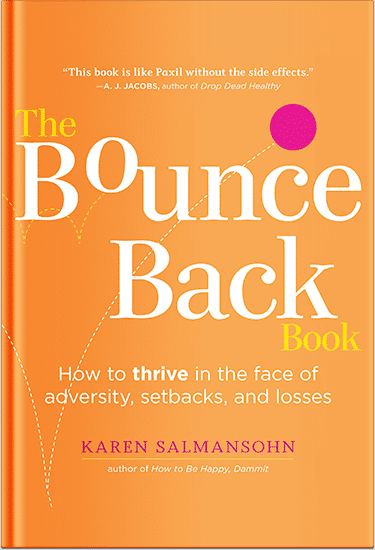
Please go to your inbox and click the confirmation link we just emailed you so you can start to get your free weekly NotSalmon Happiness Tools! Plus, you’ll immediately receive a chunklette of Karen’s bestselling Bounce Back Book!