 Anxiety is one of the most common mental health concerns in the United States, yet a surprising number of people never seek help for it. The reasons are varied: cost, distance, packed schedules, or simple reluctance to sit in a waiting room where someone might recognize them. Online therapy has genuinely shifted that equation, and the real question now isn’t whether it works for anxiety, but when it works best.
Research published by the American Psychological Association found that video-based cognitive behavioral therapy produces outcomes comparable to in-person sessions for generalized anxiety disorder. That’s a meaningful finding; it doesn’t mean online therapy suits every person or every situation, though. Some people do well in a virtual format, while others need something more intensive. What follows breaks down what online anxiety therapy actually looks like, which circumstances favor it, and when a different level of care might make more sense.
What Online Therapy for Anxiety Actually Involves
Online anxiety therapy isn’t a lesser version of in-person care – it’s just delivered through a different channel. The Arclight Counseling is one example of a counseling practice that readers may encounter when researching online therapy options in North Texas. Most online sessions happen over secure video platforms, and the therapeutic methods used – cognitive behavioral therapy, acceptance and commitment therapy, exposure-based approaches – can also be used in face-to-face treatment. A licensed therapist will assess your symptoms, set treatment goals with you, and work through structured sessions that may include homework, thought records, or gradual exposure exercises done between appointments.
The format can feel a little strange at first. But for anxiety specifically, the home environment often turns out to be an asset, because that’s precisely where anxious patterns tend to play out most. You’re not performing calmness in a clinical office – you’re working on it inside your actual life.
How Sessions Work in a Virtual Format
A standard online therapy session for anxiety runs 45 to 50 minutes over an encrypted, HIPAA-compliant video call. Your therapist will typically open with a check-in on how your anxiety has been since the last session, then move into the structured work, reviewing thought records, practicing a technique, or unpacking a situation that triggered a strong response.
Between sessions, many therapists assign short exercises: writing down automatic thoughts, trying a brief relaxation practice, or approaching a situation you’ve been avoiding in small, manageable steps. The technology itself is simpler than most people expect; a smartphone, laptop, or tablet with a working camera gets you in. A quiet room matters more than any device upgrade. If audio or video drops mid-session, most therapists are trained to pause, reconnect, and pick up right where things left off. In structure, an online session closely mirrors sitting across from a therapist in an office.
What Types of Anxiety Online Therapy Can Address
Online therapy covers a wide range of anxiety presentations. Generalized anxiety disorder, social anxiety disorder, health anxiety, panic disorder, and specific phobias all respond to the evidence-based treatments that licensed therapists can deliver through a virtual format. The National Institute of Mental Health estimates that roughly 31 percent of American adults experience an anxiety disorder at some point in their lives – which gives you some sense of how many people are working through these concerns and how much clinical experience now exists around treating them remotely.
Social anxiety, interestingly, sometimes responds especially well online, because the barrier of walking into a therapist’s office and sitting with a stranger is removed entirely. Someone who finds face-to-face encounters genuinely difficult may feel far more at ease speaking from a familiar space, and that comfort can accelerate the early stages of therapy – often the hardest part to get through. What matters most is that the anxiety is suited to outpatient-level care, rather than being a crisis or a condition requiring intensive intervention.
When Online Therapy Is a Good Option for Anxiety Support
The clearest signal that online therapy is worth trying is this: your anxiety is real and disruptive, but you’re still functioning in daily life. You’re not in crisis. You don’t need medication adjustments every few weeks that require in-person evaluation. You want structured, consistent support that helps you understand your anxiety patterns and respond to them differently.
If that describes where you are, the logistical advantages of virtual therapy start to matter quite a bit; you can book a session during a lunch break, attend from your car if your apartment has thin walls, or keep appointments without your employer or family knowing your schedule. None of that makes the therapy more effective on its own, but it removes the friction that causes people to cancel, delay, or abandon treatment altogether. Honestly, consistency is one of the strongest predictors of good outcomes in anxiety therapy, and online formats make it a lot easier to maintain for a lot of people.
Access Barriers That Online Therapy Removes
Geography is one of the most stubborn barriers to mental health care in the United States. If you live somewhere rural, a therapist who specializes in anxiety disorders might be an hour away – or might not exist within a reasonable distance at all. Online therapy solves that entirely, opening access to licensed clinicians anywhere in your state rather than just whoever happens to practice nearby. Cost is a separate but related headache. Many online therapy platforms work with major insurance plans, and the absence of office overhead sometimes translates into lower session fees.
Transportation costs, missed work hours, and childcare expenses tied to in-person appointments also disappear. For people who experience agoraphobia or whose anxiety makes public spaces genuinely difficult, a virtual session removes the stress of the commute that might otherwise spike their symptoms before the session even begins. These aren’t trivial logistical wins – for many people, they’re the difference between getting help and putting it off indefinitely.
Building Consistency From Home
One underappreciated advantage of online therapy for anxiety is how naturally it fits into a routine without disrupting it. There’s no commute to build into your week. You log on, do the work, and return to your day within the hour. For parents, shift workers, or frequent travelers, that kind of flexibility means therapy stays in the calendar instead of getting bumped whenever life gets busy.
Some therapists working in virtual formats also offer asynchronous check-ins between sessions through secure messaging, which lets you capture an anxious moment in real time rather than trying to reconstruct it days later. The trick is that immediate capture tends to make the next session more productive; both you and your therapist have a clearer picture of what actually triggered the response and how you handled it. Building a consistent therapeutic relationship, even through a screen, is what produces lasting change.
When In-Person Therapy May Serve You Better
Online therapy isn’t the right answer for every situation. Full stop. If your anxiety comes alongside severe depression, active substance use, or thoughts of self-harm, in-person care – or a higher level of support entirely – is the more appropriate starting point. Virtual therapy also runs into real limits for people who don’t have a private, stable space to speak freely.
If you share a small apartment and can’t carve out 50 minutes of privacy, or if your internet connection drops regularly, session quality suffers in ways that undermine the work. And some people find that the screen creates a distance they can’t overcome; they need physical presence to feel safe enough to open up. That’s a legitimate clinical reality, not a personal failing. A good therapist, whether online or in person, will tell you honestly if the format isn’t serving your progress. The goal is effective support, not making online therapy work simply because it’s convenient.
Signs That Warrant More Intensive Care
Certain anxiety presentations need more than weekly outpatient sessions can offer. Severe panic disorder that’s led to multiple emergency room visits, OCD with rituals consuming several hours of your day, or anxiety so intense that leaving the house or holding down work feels impossible, these typically require intensive outpatient programs, partial hospitalization, or other structured formats that a one-hour virtual session can’t replicate.
If you’ve tried outpatient therapy before and your symptoms didn’t budge, that’s worth discussing with a psychiatrist before starting another round at the same level of care. Medication evaluation is another area where in-person assessment often carries real weight, particularly for anxiety disorders with a strong physiological component. Online therapy can run alongside medication management, but it doesn’t replace the evaluation process. Knowing the difference between anxiety that responds to structured outpatient work and anxiety that needs something more intensive can save you months of trying an approach that was never quite matched to your actual needs.
Conclusion
Online therapy is a genuinely effective option for anxiety support – but how well it serves you depends on your specific situation. It works well when your anxiety is disruptive but manageable, when consistent access to a therapist would otherwise be difficult, and when you can find a private, quiet space for sessions. It’s less suited to crisis situations, severe presentations, or cases where in-person presence changes something real about how safe and open you feel.
But here’s the thing – the most important step isn’t choosing a format. It’s starting. Anxiety that goes unaddressed tends to quietly narrow your life over time, and both in-person and online therapy offer real, evidence-based tools to push back against that. Talk to a licensed therapist, explain your situation honestly, and ask which format they think fits, most clinicians will tell you directly, because the format that actually works is the one you’ll keep showing up for.
P.S. Before you zip off to your next Internet pit stop, check out these 2 game changers below - that could dramatically upscale your life.
1. Check Out My Book On Enjoying A Well-Lived Life: It’s called "Your To Die For Life: How to Maximize Joy and Minimize Regret Before Your Time Runs Out." Think of it as your life’s manual to cranking up the volume on joy, meaning, and connection. Learn more here.
2. Life Review Therapy - What if you could get a clear picture of where you are versus where you want to be, and find out exactly why you’re not there yet? That’s what Life Review Therapy is all about.. If you’re serious about transforming your life, let’s talk. Learn more HERE.
Think happier. Think calmer.
Think about subscribing for free weekly tools here.
No SPAM, ever! Read the Privacy Policy for more information.
One last step!
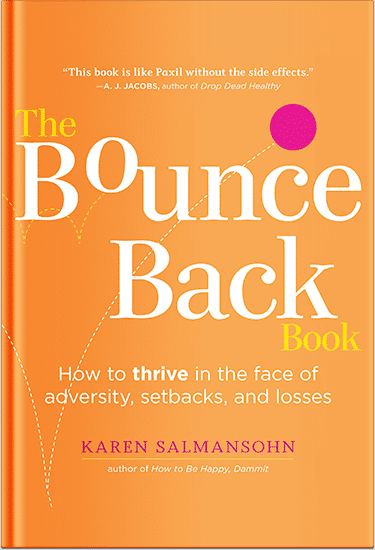
Please go to your inbox and click the confirmation link we just emailed you so you can start to get your free weekly NotSalmon Happiness Tools! Plus, you’ll immediately receive a chunklette of Karen’s bestselling Bounce Back Book!