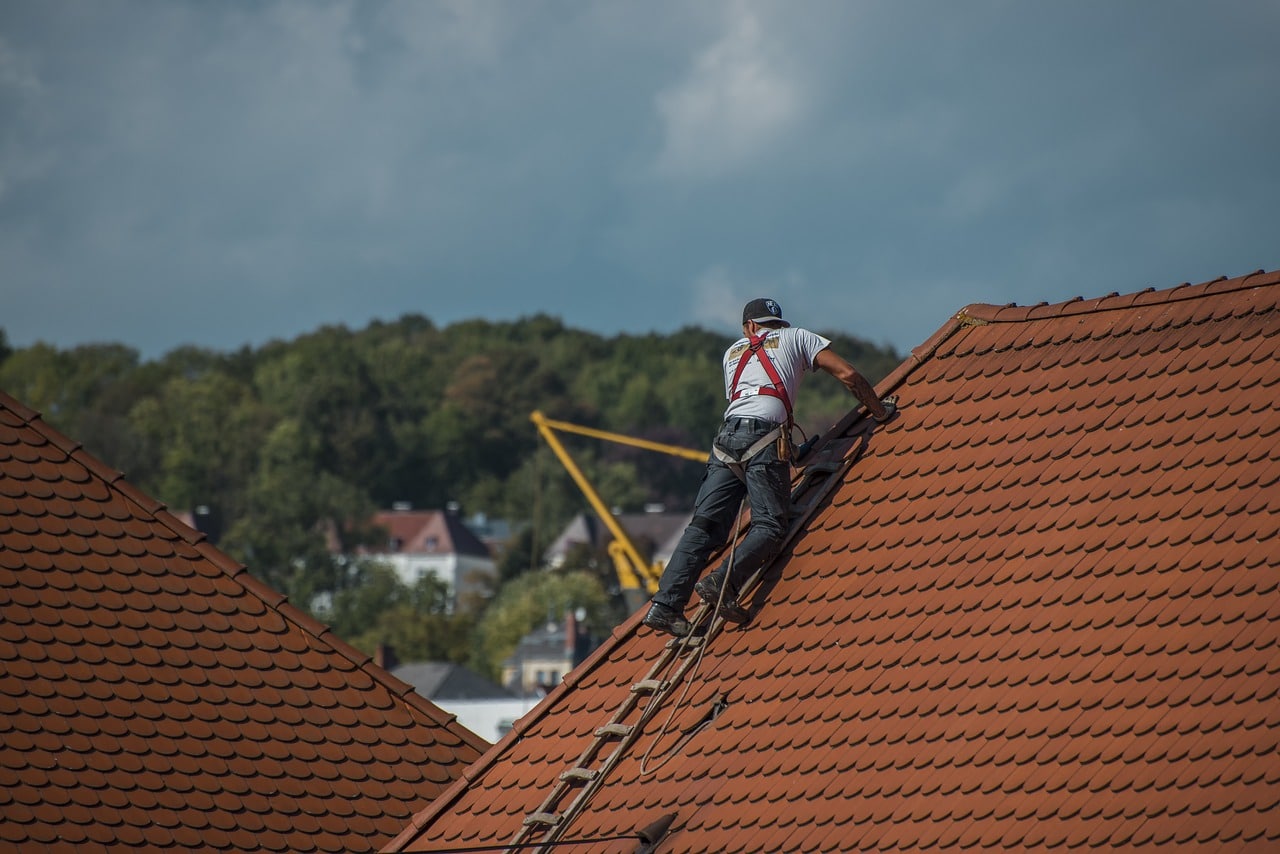
 Roofing problems compound. A small leak that enters through a failed flashing joint creates moisture in the attic. That moisture compromises the insulation, begins to affect the decking, and if sustained, reaches the ceiling below.
By the time a homeowner calls a contractor in response to an interior water stain, the repair is no longer limited to replacing the flashing. It involves removing and replacing damaged decking and potentially ceiling material as well. The small repair that was available six months earlier has become a substantially larger project, and the cost has changed accordingly.
This piece explains what homeowners get wrong when handling a roof repair. The specific decisions and non-decisions that convert a manageable fix into a full replacement scenario.
How to Tell Whether a Roof Needs Spot Repair or Complete Replacement Before Getting a Contractor Involved
The distinction between a repair and a replacement is the question that determines the magnitude of the investment, and it is the question that is most frequently answered in a way that serves the contractor’s interests rather than the homeowner’s.
Spot repair is appropriate when the roofing failure is localized — a specific area of damaged shingles, a single failed flashing joint, a localized section of the deck where moisture infiltration has compromised the decking but not spread beyond a confined area. Spot repair is also appropriate when the overall roof condition is sound — when the shingles have significant remaining lifespan, when the structure’s underlying components are intact, and when the specific failure is isolatable without affecting the integrity of surrounding areas.
Complete replacement is appropriate when the failure is widespread.
When shingle deterioration, granule loss, or flashing condition affect the majority of the roof rather than a specific area. It is also appropriate when the roof has reached the end of its expected lifespan — standard architectural shingles carry warranties of 25 to 30 years, and a roof approaching that age with multiple problem areas has a replacement window rather than a repair window. And it is appropriate when structural damage — decking deterioration, rafter issues, or systemic ventilation failure — affects enough of the roof system that spot repair would address the symptom without the underlying condition.
The diagnostic test is a thorough inspection that covers the entire roof surface, not just the area where the leak is presenting. A leak that appears in one corner may originate from a flashing failure on the opposite side of the roof, with the water traveling a significant distance before finding an exit. A contractor who recommends replacement based on the presentation of a single leak, without inspecting the full roof, is recommending based on insufficient information. A contractor who inspects fully and then recommends replacement should be able to show you what they found that supports that recommendation.
Why Delaying a Minor Roof Repair Almost Always Increases the Final Cost
Water is the mechanism that converts a minor roofing problem into a major one, and it operates continuously rather than waiting for a convenient inspection window.
A small entry point — a failed caulk joint at a pipe boot, a separated flashing at a chimney, a section of shingles lifted by wind — allows a quantity of water into the roof system during each rain event. The water that enters does not drain out; it is absorbed by the wood fiber of the decking, the insulation, and the framing members it contacts. Wood that is repeatedly wetted and dried without adequate opportunity to fully dry between events develops the conditions for mold and rot. The progression from moisture infiltration to decking rot is not a matter of years — it can develop in one or two wet seasons if the entry point is not addressed.
The cost of addressing a failed pipe boot or a separated flashing joint
It is typically in the range of a few hundred dollars, including labor and materials. The cost of replacing the damaged decking that develops if that entry point goes unaddressed is measured in square footage of decking at a significantly higher per-unit cost, plus the additional labor and the material required to do it correctly. The cost of replacing decking that has been wet long enough to develop structural compromise is higher still.
Insurance is a related consideration in storm-affected areas. A homeowner who reports storm damage to their insurer promptly — in the season when the storm occurs — has a claim that is evaluated against the known storm event. A homeowner who delays the report because the damage seems minor may find that subsequent damage that developed from the original entry point is characterized as resulting from deferred maintenance rather than the storm, which affects coverage. The window for storm damage claims is not indefinite, and early documentation of the damage, its scope, and its cause is the foundation of a claim that proceeds without complication.
What Roofing Contractors Look for During an Inspection That Homeowners Typically Miss
A professional roofing inspection covers elements of the roof system that are not visible from the street and that most homeowners have no framework for evaluating even if they accessed the roof.
Flashing condition at every penetration and transition point is the first area of professional attention. Chimney flashing involves multiple components. Base flashing, counter flashing, step flashing at the sides, and cricket or saddle flashing at the uphill side of large chimneys — that can fail independently of each other. A homeowner looking at a chimney sees a chimney; an inspector examines each flashing component for separation, corrosion, improper overlap, and sealant failure.
Soffit and fascia condition is related to the roofing system’s performance.
Even though it is at the roof perimeter rather than on the surface. Deteriorated soffit material or blocked soffit vents affect attic ventilation, which affects shingle temperature and lifespan. Fascia rot — which is common in areas where gutters have been allowed to overflow or where gutter attachment has failed — indicates that the roof’s edge detail is compromised in a way that allows water to enter the structure.
Sheathing condition at the eaves and valleys is an area of particular moisture vulnerability.
Ice damming, which occurs when warm attic air melts snow that refreezes at the cold eave overhang, can drive water under shingles and into the sheathing. Valley areas, where two roof planes intersect, accumulate water at a higher rate than flat sections and are more susceptible to sheathing deterioration if the valley flashing is inadequate. A complete inspection includes these specific areas rather than a general surface assessment.
Homeowners in Chattanooga facing a visible roofing problem often receive a repair recommendation without a full inspection — which means the scope is based on what is immediately visible rather than the condition of the underlying system. For situations where the distinction between repair and replacement is genuinely uncertain, a roof repair chattanooga evaluation that covers the full roof system before any recommendation is made produces a more accurate picture of what the situation actually requires.
How Weather Exposure Accelerates Hidden Roof Damage Between the Time It Starts and the Time It’s Discovered
The timing of roofing damage and its discovery is rarely synchronized. A flashing failure that begins in March may not produce a visible interior stain until a sustained rain event in June. A section of shingles lifted by a February wind event may not leak until the first significant spring storm. The gap between when the damage occurred and when it presents as an interior problem is the window during which it is growing — and the growth rate is determined by the weather events that occur in that window.
Tennessee’s spring storm season — which includes hail events, high winds, heavy rainfall, and in some years tornado activity across Middle and East Tennessee — compresses significant weather exposure into a relatively short period. A roof with a pre-existing vulnerability that was adequate through a dry winter may not be adequate through spring storm season, and the number and severity of weather events in that window determines how quickly the vulnerability becomes a significant problem.
UV degradation is a slower but continuous process
It affects shingle surface condition across the full roof. Shingles lose their protective granule layer over time through UV exposure, mechanical weathering, and thermal cycling. The rate of degradation is higher on south-facing and west-facing roof planes that receive more direct and more afternoon sun respectively. A roof with mixed shingle condition — some planes with adequate remaining lifespan and others that are at or past the end of theirs — may present as a repair situation on one slope and a replacement situation on another. The honest inspection identifies this rather than treating the roof as a uniform whole.
For homeowners in Murfreesboro addressing roofing concerns after a weather event or as part of routine maintenance planning, the most costly outcome is typically not the repair itself — it is a problem that went unassessed long enough to move past its most manageable stage. A roof repair murfreesboro evaluation that covers the full system and produces an honest scope assessment gives homeowners the information they need to make that decision before the window for a straightforward fix has closed.
The Decision That Costs the Most Is the One That Gets Delayed
Roofing decisions have a specific cost structure: action is less expensive than inaction, and early action is less expensive than late action. The repair that costs a few hundred dollars now will not cost the same amount in six months if the entry point has been active through a wet season. The inspection that costs nothing to schedule now provides information that a homeowner will wish they had when they are standing in their living room watching a ceiling stain expand during a rainstorm.
The homeowners who manage roofing costs effectively are not the ones who are most aggressive about replacement. They are the ones who inspect regularly, who address problems when they are small, who choose contractors based on track record rather than price alone, and who understand the difference between a repair and a replacement before signing an estimate for either.
For homeowners in Nashville at any stage of a roofing decision — from a minor concern to a potential full replacement — the usefulness of a roofing contractors nashville assessment depends on whether it reflects the actual condition of the roof or the economic incentives of the contractor conducting it. Local experience and inspection depth are what separate a recommendation that is calibrated to what the roof actually needs from one that defaults to replacement when repair would suffice, or defers replacement when the roof has passed the point of effective repair.
P.S. Before you zip off to your next Internet pit stop, check out these 2 game changers below - that could dramatically upscale your life.
1. Check Out My Book On Enjoying A Well-Lived Life: It’s called "Your To Die For Life: How to Maximize Joy and Minimize Regret Before Your Time Runs Out." Think of it as your life’s manual to cranking up the volume on joy, meaning, and connection. Learn more here.
2. Life Review Therapy - What if you could get a clear picture of where you are versus where you want to be, and find out exactly why you’re not there yet? That’s what Life Review Therapy is all about.. If you’re serious about transforming your life, let’s talk. Learn more HERE.
Think happier. Think calmer.
Think about subscribing for free weekly tools here.
No SPAM, ever! Read the Privacy Policy for more information.
One last step!
Please go to your inbox and click the confirmation link we just emailed you so you can start to get your free weekly NotSalmon Happiness Tools! Plus, you’ll immediately receive a chunklette of Karen’s bestselling Bounce Back Book!


