 Running a business becomes exhausting when every decision, task, and problem depends on you. Constantly taking responsibility for everything can create bottlenecks, drain your energy, strain personal relationships, and leave little time for meaningful growth. Discover how strategic delegation, targeted executive support, and better boundaries can help you regain control, reduce stress, and build a business that thrives without your constant involvement.
The Trap of Founder Self-Reliance
Self-reliance often begins as a practical response to limited resources. During the early stage of a business, you may handle sales calls, approve invoices, and answer customer emails because there’s no one else available. That flexibility helps you survive. Trouble begins when an early necessity becomes your permanent operating style.
A founder who reviews every proposal, resolves every team disagreement, and checks every expense soon becomes a bottleneck. Employees wait for answers instead of acting. Minor decisions interrupt strategic work. Even strong team members may stop taking initiative because they expect you to step in.
The broader self-reliance trap also has an emotional side. Asking for supportive solutions can feel like admitting that you lack control or competence. Yet excessive independence may push capable people away and reinforce the belief that no one else can meet your standards.
Look for signs in your calendar and behavior. Are you regularly completing tasks that someone else could learn within 30 days? Do projects stall during your time off? Do you rewrite completed work without first giving useful feedback? These patterns reveal systems that depend too heavily on you.
Keep a task log for two weeks. Label each item as founder-only, teachable, or unnecessary. Be strict. Setting the company’s direction may require you, while formatting reports or chasing routine approvals usually doesn’t. The log gives you evidence for delegation instead of leaving you to rely on instinct.
How Chronic Overload Drains Joy
 Overload affects more than productivity. When your mind stays occupied by unfinished work, ordinary moments lose their restorative value. Dinner becomes a chance to check messages. A quiet weekend turns into catch-up time. You may be physically present with people you care about while mentally reviewing payroll, deadlines, or an employee problem.
Over time, this pattern can create irritability, poor concentration, and emotional distance. You might also lose interest in activities that once helped you feel like yourself. The business receives your alert hours, while family, friendships and personal health get whatever attention remains.
Psychologists examining when self-sufficiency becomes self-sabotage point to the costs of refusing support. In a work setting, those costs can appear as delayed decisions, inconsistent follow-through, and exhaustion disguised as discipline.
Create clear indicators that tell you when your workload has crossed a reasonable line. Missed meals, repeated sleep disruption, and canceled personal plans are useful signals because they’re observable. So are recurring mistakes, unread reports, and decisions that sit untouched for a week.
Then establish a shutdown routine. Spend the final 15 minutes of the workday recording open items, assigning the next action, and choosing tomorrow’s top three priorities. Capturing those details helps your brain stop rehearsing them later. If genuine emergencies regularly break your boundary, document each one. A recurring “emergency” usually points to an unclear process, missing authority, or a role that needs to be filled.
Bring In Targeted Executive Support
Delegation works best when you transfer a defined area of responsibility, not a random pile of tasks. Start with work that demands specialized skill, repeats on a predictable schedule, or consumes time without requiring your personal judgment. Finance, operations, hiring, and project coordination often fit those criteria.
For example, imagine a founder spending ten hours each week updating cash forecasts, reviewing reports, and preparing information for lenders. The work matters, but it prevents the founder from meeting prospective partners or developing the next service line. Companies that need senior financial guidance without adding a full-time executive may consider fractional financial management services as one targeted form of support.
The same principle applies elsewhere. A contract operations specialist might document workflows during a six-month growth period. An experienced project lead could take ownership of a major system rollout. A recruiting partner may help source candidates when hiring demands exceed the internal team’s capacity.
Avoid vague instructions such as “help with finance” or “take over operations.” Define the outcome, decision rights, and reporting rhythm. A useful assignment might state that the specialist will produce a 13-week cash forecast every Friday, flag variances above an agreed threshold, and meet with you twice a month.
The CEO delegation trap persists when founders hand off execution but retain every decision. Decide which choices the person can make independently, which require consultation, and which still need your approval. Clear authority creates accountability and reduces the stream of small questions that keeps pulling you back into daily details.
Reclaim Your Energy for Big Picture Goals
New support won’t automatically improve your life if you fill the recovered hours with more low-value work. Protect that capacity before it disappears. Put strategic priorities, thinking time, and personal commitments on the calendar with the same seriousness you give customer meetings.
Choose one or two business outcomes that genuinely require your perspective. These might include refining the company’s positioning, building key relationships, or evaluating a new market. Give each outcome a measurable target and a regular block of uninterrupted time. “Work on growth” is too vague. “Interview five long-term customers by March 15 and identify the three strongest reasons they renew” gives your attention a clear purpose.
You may feel an urge to reclaim delegated work as soon as someone handles it differently. That reaction is a common form of self-sabotaging behavior, especially when control has become a way to manage anxiety. Evaluate the result against an agreed standard before stepping in. A different method can still produce a strong outcome.
Review your responsibilities once a month. Ask which tasks require your authority, which could move to another owner, and which no longer need to happen. Also examine the quality of your energy. A calendar full of high-level meetings can still exhaust you if every conversation involves conflict or urgent decisions.
Leave some recovered time unassigned. Space for exercise, an unhurried meal, or an afternoon away from screens supports better judgment when you return. Rest is part of maintaining the person responsible for the company’s most consequential choices.
Your business should be able to move when you’re unavailable for a day. Choose one recurring responsibility that currently stops without you, name a capable owner, and define the decisions that person can make. The first sign of progress will be simple: the work continues, and you don’t feel compelled to check it.
P.S. Before you zip off to your next Internet pit stop, check out these 2 game changers below - that could dramatically upscale your life.
1. Check Out My Book On Enjoying A Well-Lived Life: It’s called "Your To Die For Life: How to Maximize Joy and Minimize Regret Before Your Time Runs Out." Think of it as your life’s manual to cranking up the volume on joy, meaning, and connection. Learn more here.
2. Life Review Therapy - What if you could get a clear picture of where you are versus where you want to be, and find out exactly why you’re not there yet? That’s what Life Review Therapy is all about.. If you’re serious about transforming your life, let’s talk. Learn more HERE.
Think happier. Think calmer.
Think about subscribing for free weekly tools here.
No SPAM, ever! Read the Privacy Policy for more information.
One last step!
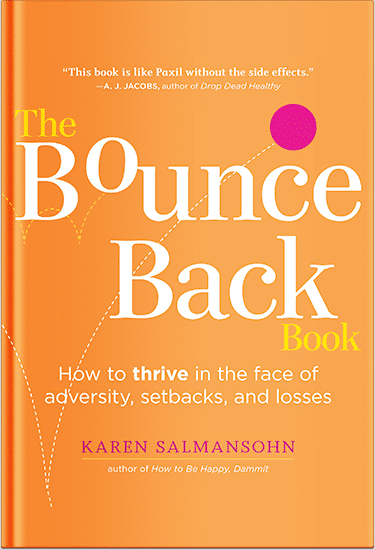
Please go to your inbox and click the confirmation link we just emailed you so you can start to get your free weekly NotSalmon Happiness Tools! Plus, you’ll immediately receive a chunklette of Karen’s bestselling Bounce Back Book!