 Unexpected challenges can disrupt even the most carefully made plans. A sudden career change, a health issue, or a personal loss can leave you feeling overwhelmed and unsure.
You can’t always control what happens, but you can learn to manage your reactions and protect your mental and emotional health during tough times. Building resilience involves learning how to adapt and respond during difficult periods.
Protecting Your Peace of Mind
When things get chaotic, your first step should be to find some inner calm. This doesn’t mean ignoring the problem, but rather giving yourself the mental space to handle it well.
Start by managing how much information you take in. Constantly checking the news or social media can make anxiety worse. Set specific times to check for updates and stick to them.
Use simple grounding techniques to stay present. This could be as easy as taking five deep breaths, focusing on your feet on the floor, or naming five things you can see around you. These small actions can help calm racing thoughts and make the situation feel more manageable.
It’s also important to focus on maintaining mental health during change by keeping routines when you can, like your morning coffee or a short daily walk.
Navigating Stressful Situations
Once you feel steadier, you can start dealing with the practical side of things. A major curveball often brings a long to-do list that can feel overwhelming. Instead of looking at the whole problem, focus on the first few steps. Break big problems into small, manageable tasks and tackle them one at a time.
An unexpected accident can create challenges that go beyond physical recovery, including medical expenses, insurance concerns, and legal questions. Addressing these practical concerns is often an important part of reducing stress and regaining a sense of stability. For injury-related legal matters, some individuals choose to consult abogados de lesiones personales as they evaluate their options.
Seeking Support When Needed
You don’t have to go through tough times alone. Asking for help shows strength, not weakness. Your support system can include friends, family, coworkers, or a therapist. Sometimes, just talking about what you’re going through with someone who will listen without judgment can make a huge difference.
Be clear about what you need. People often want to help but don’t know how. Don’t be afraid to ask for exactly what would be most helpful, whether it’s a home-cooked meal, help with an errand, or just a friend to sit with you quietly. If your personal network feels strained, think about joining a support group for people going through similar experiences. Sharing your story with others who truly understand can be incredibly validating and empowering.
Building a Strong Recovery Mindset
As the initial crisis calms down, the focus shifts to long-term recovery and building resilience. This process isn’t a straight line; you’ll have good days and bad days. The key is to be kind to yourself and patient. Acknowledge your progress, no matter how small, and don’t get down on yourself for setbacks. Your feelings are valid, and it’s okay not to be okay sometimes.
Try to find meaning in the experience. What has this challenge taught you about yourself? What new strengths have you found? Changing your perspective from “Why did this happen to me?” to “What can I learn from this?” can be a powerful way to grow.
Be grateful for the good things in your life, even when it feels hard. Recovery often happens gradually, through small decisions that support your well-being and help restore a sense of stability.
Life’s curveballs are unavoidable, but they don’t have to define you. By focusing on what you can control, including your mindset, your actions, and your willingness to seek help, you can face challenges with greater confidence and resilience.
P.S. Before you zip off to your next Internet pit stop, check out these 2 game changers below - that could dramatically upscale your life.
1. Check Out My Book On Enjoying A Well-Lived Life: It’s called "Your To Die For Life: How to Maximize Joy and Minimize Regret Before Your Time Runs Out." Think of it as your life’s manual to cranking up the volume on joy, meaning, and connection. Learn more here.
2. Life Review Therapy - What if you could get a clear picture of where you are versus where you want to be, and find out exactly why you’re not there yet? That’s what Life Review Therapy is all about.. If you’re serious about transforming your life, let’s talk. Learn more HERE.
Think happier. Think calmer.
Think about subscribing for free weekly tools here.
No SPAM, ever! Read the Privacy Policy for more information.
One last step!
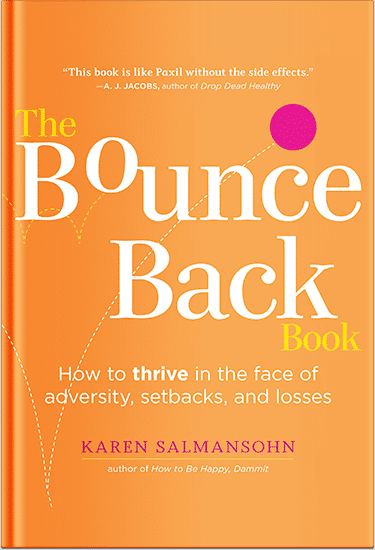
Please go to your inbox and click the confirmation link we just emailed you so you can start to get your free weekly NotSalmon Happiness Tools! Plus, you’ll immediately receive a chunklette of Karen’s bestselling Bounce Back Book!