 Discover how tiny creative times restore mental sanity through rhythmic activities and visible progress. Learn practical stress-reduction strategies today.
Three surprising ways tiny creative time restores sanity include leveraging rhythmic hand motions to lower cortisol levels, creating visible progress to boost self-esteem, and establishing portable rituals.
Research indicates that short bursts of tactile creativity can significantly reduce stress hormones. This shifts focus away from multitasking and actively improves mental well-being.
Yesterday, I caught myself staring at the kettle, trying to remember whether I’d already switched it on. My mind ping-ponged between grocery lists, calendar alerts, and a half-written email. Modern life often feels like mental whiplash, but there is a simple reset button: ten minutes with yarn. One short crochet break quietly slams those mental tabs shut.
1. Busy Hands Mean a Calmer Mind
Neuroscientists describe crochet as a “bilateral, rhythmic activity.” The repetitive hand motion occupies just enough brain capacity to hush spiraling thoughts. In a study of more than 3,500 knitters, 81% reported feeling happy after the activity. This provides a physiological basis for the calm many crafters feel.
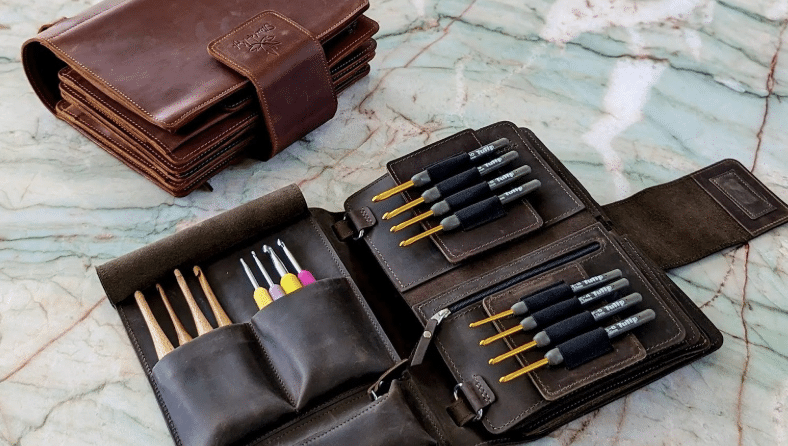
Consider Maya, a commuter who crochets on the train. She reports that sliding her hook through each loop dials down the background noise. The key to this mental relief is accessibility. Stashing a hook and tiny yarn cake in Thread & Maple’s handcrafted crochet hook cases eliminates decision friction.
When tools are organized in a dedicated sleeve that snaps shut, there is no rummaging or tangling. It allows for an immediate transition to stitching and breathing. Even in colder months, keeping hands nimble allows this practice to continue outdoors. This extends the benefits of the craft beyond the living room.
| Key Insight: The repetitive motion of crochet isn’t just a hobby; it’s a bilateral rhythmic activity that actively lowers cortisol. This biological response physically nudges your brain’s worry center offline, allowing for immediate stress relief. |
2. Visible Progress Provides a Confidence Boost
The brain responds positively to visible evidence of progress, much like the satisfaction derived from completing a sticker chart. Even two rounds on a simple project deliver a micro-dose of accomplishment.
Crafting and other artistic activities showed a meaningful effect in predicting people’s sense that their life is worthwhile. When large life goals feel stalled, these tangible wins provide immediate feedback.
Individuals who engaged in small creative acts daily felt “flourishing”, a term researchers use to describe thriving mental health, just three days later. Those few stitches today can lead to a more positive outlook later in the week.
A helpful strategy is to snap a quick photo of the piece before putting it away. Scrolling through a digital album of these small wins can help counteract moments of impostor syndrome.
| Pro Tip: Don’t just stash your work away. Snap a quick photo of your progress after every session. Creating a digital album of these small wins helps combat impostor syndrome and visualizes your accumulated effort over time. |
3. A Portable Ritual Ensures Consistency
Habits adhere best when anchored to specific cues. Just as morning coffee might trigger journaling, other transition points can trigger creative time.
Engaging in creating arts significantly predicts increased life satisfaction above known sociodemographic predictors. Because crochet is inherently portable, the ritual can be tethered to nearly any moment.
This is where the quality of the setup matters. A slim organizer that tucks neatly into a purse or glove compartment protects hooks from damage. My friend Carlo keeps his kit under the seat of his scooter. When traffic backs up, he parks and crochets a row instead of succumbing to road rage.
| Key Insight: Transformation happens in the margins of your day. By anchoring creative habits to existing transition points – like waiting in traffic or boiling water – you turn “dead time” into a restorative ritual without needing extra hours. |
Getting Started in 60 Seconds
- Choose one tool: A 4 mm hook is generally beginner-friendly.
- Prepare the kit: Slip the yarn and hook into a protective case.
- Set a timer: Dedicate just 10 minutes to a simple swatch.
- Document: Take a progress picture and repeat the next day.
| Important: Don’t let perfectionism stall your start. The goal is mental relief, not a masterpiece. Using a simple 4mm hook and basic yarn allows you to focus on the rhythm rather than the complexity of the pattern. |
Your Next Steps
Keeping hands occupied with stitches calms a racing mind, while quick, visible progress delivers a necessary confidence jolt. By establishing a portable ritual, this creative habit can thrive anywhere. Schedule ten minutes tomorrow to see how those tiny stitches can pull thoughts back together.
P.S. Before you zip off to your next Internet pit stop, check out these 2 game changers below - that could dramatically upscale your life.
1. Check Out My Book On Enjoying A Well-Lived Life: It’s called "Your To Die For Life: How to Maximize Joy and Minimize Regret Before Your Time Runs Out." Think of it as your life’s manual to cranking up the volume on joy, meaning, and connection. Learn more here.
2. Life Review Therapy - What if you could get a clear picture of where you are versus where you want to be, and find out exactly why you’re not there yet? That’s what Life Review Therapy is all about.. If you’re serious about transforming your life, let’s talk. Learn more HERE.
Think happier. Think calmer.
Think about subscribing for free weekly tools here.
No SPAM, ever! Read the Privacy Policy for more information.
One last step!
Please go to your inbox and click the confirmation link we just emailed you so you can start to get your free weekly NotSalmon Happiness Tools! Plus, you’ll immediately receive a chunklette of Karen’s bestselling Bounce Back Book!


