 The best non-surgical facial sculpting I’ve seen is rarely about adding more volume. It’s about restoring support where the face has started to lose it, then stopping before the treatment becomes visible.
That distinction matters. A face can look tired or slightly asymmetrical even when there isn’t an obvious wrinkle to treat. The problem often sits deeper, involving changes in bone, fat compartments, ligaments, skin thickness, and soft-tissue support. Injectable treatment works best when the practitioner identifies which of those structures is responsible instead of reaching for the same filler at every appointment.
Symmetry is a structural problem, not a measurement exercise
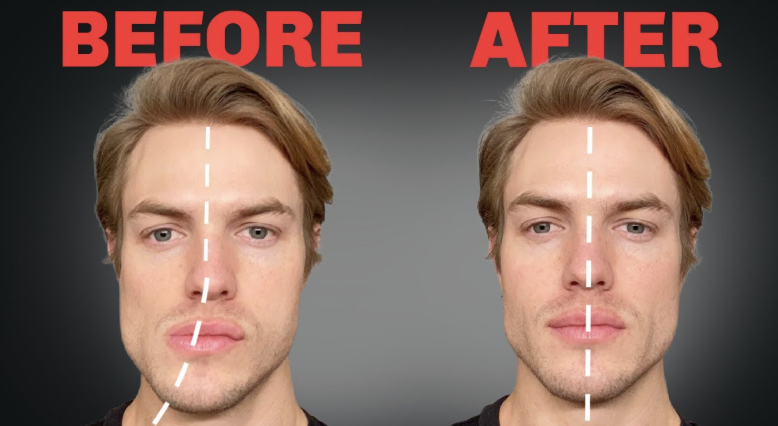
Perfect facial symmetry doesn’t exist, and trying to create it can produce a face that looks less natural. The useful question is whether an asymmetry has become more noticeable because one side has lost support, volume, or tissue quality.
Take the lower face. A patient might complain about jowling on one side, yet the visible issue isn’t necessarily excess skin. Reduced skeletal support around the chin or mandibular region can change how the overlying soft tissue sits. Similar changes occur around the midface as the underlying framework and fat compartments alter with age.
This is where treatment planning gets interesting.
A practitioner needs to separate three issues:
- loss of structural projection
- loss of soft-tissue volume
- decline in skin quality and elasticity
These problems overlap, but they aren’t interchangeable. A product designed primarily to restore projection won’t behave like a treatment intended to improve skin quality. Injecting more material simply because the face looks less supported can create heaviness rather than correction.
Why collagen-stimulating injectables have a different role
Traditional hyaluronic acid fillers are useful when the clinical objective is immediate volume or contour correction. Their predictability makes them valuable, especially in areas where precise projection is required.
Biostimulatory injectables follow a different philosophy. Rather than relying entirely on the physical presence of the injected material, certain products are designed to stimulate tissue remodeling over time.
Calcium hydroxylapatite, or CaHA, is one example. Radiesse is a well-known product in this category. Its clinical use requires an understanding of concentration, dilution, injection plane, anatomy, and the intended endpoint. The same product can serve different purposes depending on how and where it is placed.
This is also where practitioners need to distinguish structural biostimulation from skin bio-remodeling.
They sound similar, but they aren’t the same treatment strategy. A structural biostimulant is considered when support and contour are central concerns. A bio-remodeling injectable such as Profhilo is aimed more toward improving tissue quality and hydration through its formulation and treatment protocol. It shouldn’t be treated as a substitute for a product selected specifically for skeletal projection.
For practitioners comparing injectable categories or sourcing products for clinical use, a wholesale catalogue can be useful when it provides formulation details, treatment indications, application information, and safety considerations in one place. A resource such as Radiesse wholesale for practitioners is worth checking in this context, particularly for reviewing how injectable product categories differ. The page also presents Profhilo products, including H+L, Body Kit, and Structura, with information around their mechanisms and application. That distinction matters because product selection should follow the tissue problem being treated, rather than the other way around.
The face often needs less volume than practitioners expect
One of the recurring mistakes in non-surgical sculpting is treating visible laxity as though it automatically means volume deficiency.
Consider a patient with early lower-face laxity. Adding substantial filler to the cheeks might create more projection, but it doesn’t necessarily improve the transition between the cheek, jawline, and lower face. In some patients, extra volume makes the face look wider.
A better approach starts with assessment.
Look at the patient from the front, three-quarter, and profile views. Assess the relationship between the cheek, chin, lips, and mandibular contour. Then look at movement and expression. Static symmetry alone can be misleading.
Photographs are useful here, but they shouldn’t replace examination. Palpation gives information about tissue thickness, mobility, and underlying structure that a photograph cannot provide.
The practical question becomes:
What is missing, and at which anatomical level?
If projection is deficient, structural correction deserves consideration. If skin quality is the dominant issue, a skin-focused approach makes more sense. If both are present, combining treatment categories might produce a better result than asking one injectable to do everything.
A simple treatment decision framework
| Clinical finding |
Main treatment consideration |
Common mistake |
| Localised loss of projection |
Structural filler or biostimulatory approach |
Treating the whole face with volume |
| Mild skin laxity with poor tissue quality |
Skin bio-remodeling or collagen-focused treatment |
Expecting immediate lifting |
| Marked skeletal deficiency |
Careful structural assessment, sometimes surgical consultation |
Assuming injectable treatment can replace surgery |
| Facial asymmetry |
Side-to-side anatomical assessment |
Injecting equal amounts on both sides |
| Heavy lower face with adequate volume |
Conservative support strategy |
Adding more filler to the lower face |
| Thin, crepey skin |
Skin-quality treatment |
Using deep structural filler as the first response |
The table isn’t a protocol. It’s a way to avoid one of the biggest planning errors in aesthetic medicine: selecting the product before identifying the problem.
Injection plane matters as much as product choice
Practitioners already know this, but it’s worth stressing because non-surgical sculpting is often discussed as if the injectable itself determines the outcome.
It doesn’t.
Depth, placement, dilution where applicable, cannula or needle choice, injection pattern, volume, and anatomical location all influence the final result. A product placed for structural support is being used with a different objective from the same material used for superficial skin quality.
Facial anatomy also changes with age. Vessels, retaining ligaments, fat compartments, and tissue planes need to be considered before treatment. A technically good product in the wrong plane remains the wrong treatment.
This is one reason training and anatomical knowledge matter more than chasing a particular product trend.
The bone-support question needs honest boundaries
The phrase “bone support” can create unrealistic expectations.
Injectables do not rebuild an ageing facial skeleton in the same way skeletal tissue develops or surgical reconstruction works. Structural fillers and biostimulatory products influence the appearance and support of overlying tissues. They don’t turn a non-surgical treatment into a substitute for orthognathic or reconstructive surgery.
That distinction is especially important with patients who have significant skeletal asymmetry, substantial tissue descent, or expectations of dramatic correction.
A good consultation should identify when injectable treatment isn’t enough.
It should also identify when doing less is safer.
Who is a good candidate?
Non-surgical sculpting tends to suit patients with mild to moderate age-related changes where the main concern involves contour, support, or tissue quality rather than major anatomical deficiency.
Before treatment, assess:
- baseline facial asymmetry
- degree of skin laxity
- skeletal proportions
- previous filler or biostimulator treatments
- current medications and relevant medical history
- active infection or inflammation
- history of adverse reactions to injectable treatments
- patient expectations and willingness to accept gradual results
Contraindications and precautions depend on the specific product and patient. Product-specific prescribing information and applicable regulatory guidance should always take priority over general treatment rules.
And previous filler deserves special attention. A patient arriving with several years of undocumented injections is a different clinical problem from a treatment-naive patient. Palpation, records, imaging when indicated, and conservative planning become more important.
The most convincing result is often the one nobody identifies
There’s a temptation in aesthetic medicine to measure success by how obvious the contour change is. I think that’s the wrong benchmark for many patients seeking facial rejuvenation.
A well-planned treatment can make the jawline appear cleaner without creating a sharp artificial edge. It can improve the relationship between the chin and lower face without making the chin look larger. It can improve skin quality without giving the patient a noticeably “filled” appearance.
Symmetry also doesn’t mean making both sides identical.
It means improving the visual balance of the face while respecting its existing anatomy.
That requires restraint. It also requires accepting that different tissues respond on different timelines. Structural correction, collagen remodeling, and skin-quality improvement aren’t interchangeable outcomes, and they shouldn’t be promised as though they are.
In practice, the strongest non-surgical sculpting plans often begin with a surprisingly simple decision: identify the layer of the face responsible for the change, then choose the least aggressive tool capable of addressing it. Sometimes that means a structural injectable. Sometimes it means a skin-focused treatment. And sometimes the correct answer is to leave the syringe on the tray.
P.S. Before you zip off to your next Internet pit stop, check out these 2 game changers below - that could dramatically upscale your life.
1. Check Out My Book On Enjoying A Well-Lived Life: It’s called "Your To Die For Life: How to Maximize Joy and Minimize Regret Before Your Time Runs Out." Think of it as your life’s manual to cranking up the volume on joy, meaning, and connection. Learn more here.
2. Life Review Therapy - What if you could get a clear picture of where you are versus where you want to be, and find out exactly why you’re not there yet? That’s what Life Review Therapy is all about.. If you’re serious about transforming your life, let’s talk. Learn more HERE.
Think happier. Think calmer.
Think about subscribing for free weekly tools here.
No SPAM, ever! Read the Privacy Policy for more information.
One last step!
Please go to your inbox and click the confirmation link we just emailed you so you can start to get your free weekly NotSalmon Happiness Tools! Plus, you’ll immediately receive a chunklette of Karen’s bestselling Bounce Back Book!