You didn’t lose your discipline at 2:47 pm. Your focus hit a wall it hits most days, at roughly the same time, whether you slept eight hours or five. Willpower-based routines treat that wall as a personal failing, so you push harder, refill the coffee, and white-knuckle through a slump your own biology scheduled for you. It’s 2026, and more people than ever are tracking their own energy curves, which makes it a good moment to treat the afternoon crash as a design problem instead of a character flaw.
The brain dip itself is not mysterious. Sleep pressure builds steadily across the waking day, your alertness naturally troughs in the mid-afternoon, and if lunch included anything heavy, digestion pulls blood flow and attention away from the task in front of you. A Scottsdale, Arizona brand called Parachew has built a caffeine-free paraxanthine gummy around exactly this kind of afternoon slump, dosed at 200 mg per gummy, thirty to a jar. None of that dip is weakness, though: it’s closer to a tide schedule than a test of character, and tides don’t respond to being yelled at.
Why Does Focus Collapse at the Same Time Every Day?
Focus collapses on a schedule because your nervous system runs on one. The same biological pressure that makes you sleepy at night builds in a smaller wave across the afternoon, and most people hit the trough between one and four o’clock regardless of how their morning went. Layer a stimulant crash on top of that natural dip, and the two compound into the kind of afternoon where rereading the same paragraph feels impossible.
Caffeine is usually the stimulant doing the compounding. Your liver enzyme CYP1A2 breaks caffeine down into paraxanthine, its primary metabolite, and that conversion accounts for roughly 70 to 72 percent of the caffeine you ingest, according to the 2023 review “Paraxanthine safety and comparison to caffeine” in the National Library of Medicine’s PMC archive. CYP1A2 activity varies widely from person to person, which is a big part of why one coworker can drink espresso at 4 pm and sleep fine while another gets wired off a single cup at breakfast.
That variability is worth sitting with for a second. The compound your body already makes from caffeine, minus the caffeine itself, has become a live area of supplement formulation, and it’s worth understanding before you decide how to handle your own afternoon.
What Should You Actually Do When the Dip Hits?
You stop scheduling deep work against the dip and start scheduling around it. Fighting a predictable trough with more coffee and more resolve is the habit that keeps failing you, so the fix is structural, not moral. Build your day so the dip lands on tasks that don’t need your sharpest focus.
A few ways to actually do that:
- Move your hardest, most focus-dependent work into the morning or early afternoon, before the trough hits, and protect that window like a meeting you can’t reschedule.
- Reserve the 1 pm to 4 pm window for admin, email, filing, and low-stakes tasks that don’t collapse if your attention is soft.
- Get outside for five to ten minutes when the slump starts. Light exposure and movement do more for alertness than another scroll through your inbox.
- Eat a smaller, protein-forward lunch instead of a heavy, carbohydrate-dense one, since the size and composition of the meal changes how hard the afternoon dip hits.
- Set a recurring calendar block labeled “low focus window,” so you stop treating the dip as a surprise every single day.
Stacking habits around the dip instead of against it is the whole strategy. You’re not trying to eliminate the trough. You’re trying to stop scheduling your hardest work directly on top of it.
Where Does Stimulant Choice Actually Fit In?
Stimulant choice matters most in how it lets you down, not how it picks you up. Caffeine is effective at masking the dip in the short term, but its downstream effects- the jitteriness, the anxious edge, the crash an hour or two later- are caffeine’s own signature, not something inherent to needing energy in the afternoon. Paraxanthine, the metabolite your liver already produces from caffeine, is an adenosine receptor antagonist with higher binding potency at the A1 and A2a receptors than caffeine itself, per the same 2023 PMC review, and it clears the body faster and more completely.
| Attribute |
Caffeine |
Paraxanthine |
| Average half-life |
About 4.1 hours |
About 3.1 hours |
| Plasma clearance |
Slower |
Greater |
| Adenosine receptor binding |
Baseline potency |
Higher potency at A1 and A2a |
| Metabolic role |
Parent compound |
Primary metabolite, made via CYP1A2 |
| Natural occurrence |
Coffee, tea, cacao |
Green coffee beans, cacao fruit, citrus flowers, roasted coffee, Sicilian orange flower honey |
Paraxanthine occurs naturally in small amounts in green coffee beans, the cotyledonary leaves of the coffee plant, cacao fruit, roasted coffee beans, citrus flowers, and Sicilian orange flower honey, which is part of why researchers have circled back to it. A 2022 rodent study in the PMC archive, titled “Paraxanthine Supplementation Increases Muscle Mass, Strength, and Endurance in Mice,” found performance benefits worth further human research, and The Conversation ran a 2026 explainer on paraxanthine’s growing appearance in coffee and energy drink products.
If you want to try the metabolite directly rather than wait on your own CYP1A2 enzyme to make it for you, direct-to-consumer options exist. Parachew sells caffeine-free paraxanthine gummies at parachew.com/products/parachew in Caramel Coffee and Strawberry Lemonade, sugar-coated, with a label maximum of two gummies, or 400 mg, per day.
Noah McCashland, founder of McAb Nutraceuticals, has described the development process bluntly: “We ran the formulation past five or six labs before one of them actually solved the bitterness problem. Paraxanthine doesn’t taste friendly on its own, and we weren’t going to ship something people choked down once and never bought again.”
That’s a formulation detail, not a verdict on your afternoon. The larger point stands regardless of which stimulant, if any, you choose: the compound doing the heavy lifting when caffeine works for you is paraxanthine, and how you time your energy support matters as much as what you take.
Build the Routine Around the Dip, Not Against It
Your focus routine isn’t broken. It’s fighting a schedule instead of using one. Once you can name the hour your attention reliably drops, you can stop treating that hour like an emergency and start treating it like a known variable, something you plan low-stakes work around the same way you’d plan around a recurring meeting.
Habits stack better than willpower does because habits don’t need to be re-decided every day. Put your hardest work before the trough, put your easiest work inside it, and let your stimulant choice- caffeine, paraxanthine, or neither- support the plan instead of trying to overpower a dip your biology was always going to deliver on schedule.
P.S. Before you zip off to your next Internet pit stop, check out these 2 game changers below - that could dramatically upscale your life.
1. Check Out My Book On Enjoying A Well-Lived Life: It’s called "Your To Die For Life: How to Maximize Joy and Minimize Regret Before Your Time Runs Out." Think of it as your life’s manual to cranking up the volume on joy, meaning, and connection. Learn more here.
2. Life Review Therapy - What if you could get a clear picture of where you are versus where you want to be, and find out exactly why you’re not there yet? That’s what Life Review Therapy is all about.. If you’re serious about transforming your life, let’s talk. Learn more HERE.
Think happier. Think calmer.
Think about subscribing for free weekly tools here.
No SPAM, ever! Read the Privacy Policy for more information.
One last step!
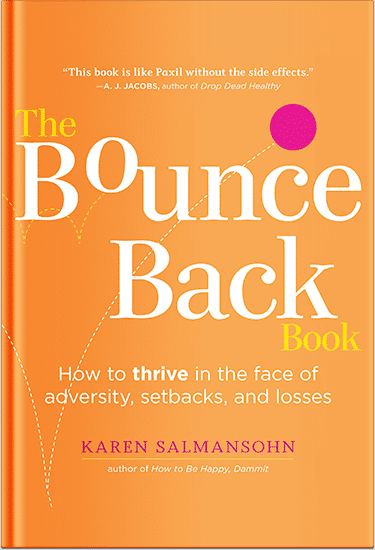
Please go to your inbox and click the confirmation link we just emailed you so you can start to get your free weekly NotSalmon Happiness Tools! Plus, you’ll immediately receive a chunklette of Karen’s bestselling Bounce Back Book!