 A wallet isn’t just a container for bills and cards, it’s a mirror. Every purchase, every skipped item, and every brand chosen quietly broadcasts something about identity and self-respect. Some of those messages are clear and affirming: “I value my health,” or “I deserve beauty in my life.” Others are murkier, rooted in shame or fear.
Take, for example, the moment someone encounters a brand like Native Smokes For Less. The decision to buy, or not buy, doesn’t rest only on the product itself. It also reflects trust, skepticism, and personal values. Each transaction, however small, is a form of self-expression. Money, in this sense, is never neutral. It whispers truths about who a person believes they are and who they want to become.
Every Dollar Tells a Story
Spending choices are not isolated acts. They are tiny brushstrokes on the larger canvas of identity. Buying a fair-trade coffee can affirm a person’s values, while choosing a bargain-bin version of something may quietly say, “I’m afraid of running out.” Even restraint, the choice not to buy, communicates something. It might be an act of discipline or, at times, a mask for insecurity.
Over weeks and years, these decisions add up. They form a pattern, a script, and eventually a story. That story is internalized: “I’m frugal,” “I’m generous,” “I’m reckless,” or “I’m careful.” The wallet becomes less about currency and more about narrative.
When Saving Disguises Itself as Fear
It’s tempting to label every act of saving as wise. But sometimes thrift isn’t about strategy; it’s about fear. Choosing the cheapest option might not stem from practical budgeting but from a hidden belief: “I don’t deserve better.”
In such cases, the wallet’s whisper is misleading. What looks like prudence may actually be self-sabotage. A person may avoid purchases that would enrich their lives, not because they can’t afford them, but because guilt or shame clouds the decision.
This is where consumer decisions become deeply psychological. It’s not about the price tag, it’s about the emotional baggage carried into the store, the cart, or the checkout page.
Tools for Listening Differently
To move from unconscious to conscious spending, one must learn to listen differently to the wallet’s whisper. A few tools can help transform financial habits into acts of alignment rather than echoes of fear:
- Name the emotion behind the choice
Before spending, or refusing to spend, pause. Ask: what emotion is driving this? Fear? Pride? Comparison? Gratitude? By naming the feeling, the decision gains clarity.
- Identify the invisible audience
Many purchases are made to impress, to soothe, or to rebel against someone unseen. Recognizing who the purchase is really for, oneself, peers, parents, or even a past version of the self, can reveal hidden motives.
- Filter spending through values
Setting clear principles ahead of time creates guardrails. For instance: “I will spend freely on health and learning, but cautiously on status symbols.” A values-based filter makes decisions less about impulse and more about integrity.
- Build friction into buying
Impulse thrives on speed. A 24-hour pause before major purchases or a short journaling exercise, “If I buy this, what need is it meeting? If I skip it, what story am I telling myself?”, adds space for reflection.
- Track for alignment, not shame
Keeping a spending log isn’t about punishment. It’s about observing patterns: which purchases brought satisfaction and which brought regret. Over time, this record reveals the language of the wallet’s whisper more clearly.
What Research Says About Spending and Identity

Behavioral economics has long shown that spending is rarely rational. Dan Ariely, author of Predictably Irrational, documents how emotions, habits, and hidden biases often drive financial choices more than logic does. People buy not simply for utility but for meaning, for what the act says about them and their place in the world.
Understanding this link between identity and spending helps explain why even small purchases can trigger disproportionate emotions. A discount find might create pride, while a splurge may cause guilt, even when both are affordable. It isn’t the money; it’s the story.
Spending as an Act of Self-Respect
When someone shifts their mindset, spending no longer feels like betrayal or guilt. A splurge becomes an affirmation, not indulgence. Saving becomes a strategy, not deprivation. Even restraint feels different: not a denial, but a conscious honoring of future goals.
This shift is subtle but profound. It transforms money from a source of anxiety into a tool of alignment. Each transaction becomes a small declaration of integrity: “This choice supports the life I am creating.”
Beyond Money: the Broader Investment in Self
Although the wallet is a tangible symbol, the same principle applies to time, energy, and relationships. Every yes and every no is an investment, a reflection of identity. When viewed through this lens, money is just one expression of a much bigger pattern: the ways people affirm, or undermine, their own worth.
The whisper of a wallet can be either deceptive or wise. It can echo old wounds or articulate new values. Listening closely allows one to choose the second path. By aligning spending with authentic priorities, every dollar spent or saved becomes more than a transaction. It becomes an act of self-respect.
P.S. Before you zip off to your next Internet pit stop, check out these 2 game changers below - that could dramatically upscale your life.
1. Check Out My Book On Enjoying A Well-Lived Life: It’s called "Your To Die For Life: How to Maximize Joy and Minimize Regret Before Your Time Runs Out." Think of it as your life’s manual to cranking up the volume on joy, meaning, and connection. Learn more here.
2. Life Review Therapy - What if you could get a clear picture of where you are versus where you want to be, and find out exactly why you’re not there yet? That’s what Life Review Therapy is all about.. If you’re serious about transforming your life, let’s talk. Learn more HERE.
Think happier. Think calmer.
Think about subscribing for free weekly tools here.
No SPAM, ever! Read the Privacy Policy for more information.
One last step!
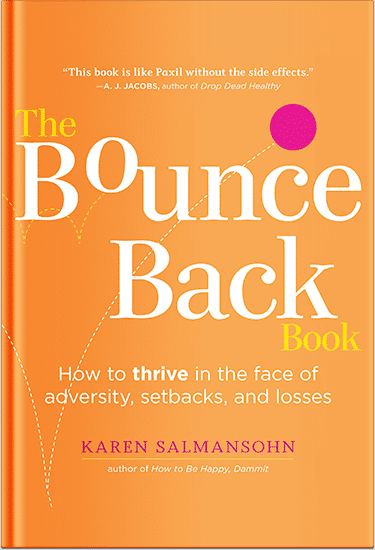
Please go to your inbox and click the confirmation link we just emailed you so you can start to get your free weekly NotSalmon Happiness Tools! Plus, you’ll immediately receive a chunklette of Karen’s bestselling Bounce Back Book!