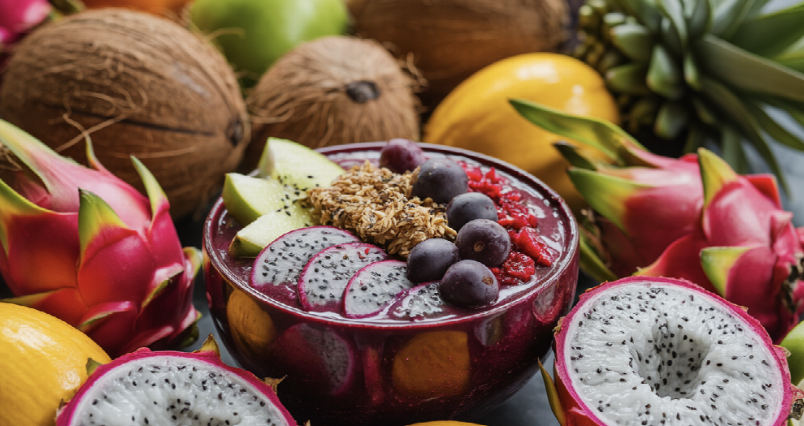
 The modern knowledge worker faces a peculiar challenge: maintaining cognitive performance across 12-hour days while avoiding the blood sugar crashes that come with typical quick-fuel options. Enter an unlikely solution from the Amazon rainforest by way of Brazilian surf culture—the coconut acai bowl, which has quietly become a fixture in the routines of founders, executives, and creative professionals.
What started as a regional Brazilian staple has evolved into something more deliberate: a nutritionally engineered breakfast built around sustained mental energy. The coconut acai base combines medium-chain triglycerides with polyphenol-rich acai in a format that delivers stable glucose levels without the insulin spike of traditional breakfast carbohydrates. This article examines why this particular combination works, where it came from, and how to construct one that actually supports cognitive function rather than just tasting good.
Why Coconut Works as a Cognitive Fuel
Coconut’s reputation in performance nutrition rests on a specific type of fat: medium-chain triglycerides, or MCTs. Unlike the long-chain fatty acids found in most dietary fats, MCTs bypass normal fat digestion and head straight to the liver, where they’re converted into ketones—an alternative fuel source the brain uses with notable efficiency.
The practical implications for daily performance include:
- Rapid Energy Conversion: MCTs require minimal processing to become usable energy, providing fuel within 30 minutes rather than the hours needed for complex carbohydrates.
- Stable Blood Sugar: Fat-based energy doesn’t trigger the insulin response that leads to mid-morning crashes, maintaining consistent glucose levels throughout the morning.
- Ketone Production: Even in people eating normal carbohydrate levels, MCTs generate mild ketosis, which research suggests may improve focus and mental clarity.
- Sustained Satiety: The combination of fat and fiber keeps hunger at bay longer than carbohydrate-heavy breakfasts, eliminating the distraction of early hunger.
This metabolic profile explains why coconut has moved beyond tropical novelty into the category of functional food—it delivers measurable effects on energy and cognition that align with the demands of knowledge work.
The Brazilian Origins of Acai Bowls
Long before acai became a global superfood phenomenon, it was simply food. Indigenous communities in the Amazon have harvested acai berries from palm trees for centuries, relying on them as a calorie-dense staple in a region where food preservation is challenging and energy demands are high.
The modern acai bowl emerged in the 1980s along Brazil’s coast, particularly in surf communities around Rio de Janeiro. Surfers adopted the traditional Amazonian preparation—frozen acai blended into a thick, sorbet-like consistency—as a post-session recovery meal. The format was practical: cold, hydrating, energy-dense, and easy to eat quickly between sets.
What transformed acai from regional food to international trend was timing. Acai’s rise coincided with growing interest in antioxidant-rich foods and the “superfood” marketing category of the early 2000s. The berry’s deep purple color—a visual marker of anthocyanin content—and its exotic origin story made it particularly marketable to health-conscious consumers in North America and Europe.
Today, acai bowls occupy an interesting position: simultaneously a legitimate source of antioxidants and fiber, and an Instagram-friendly breakfast that can easily tip into dessert territory depending on how it’s prepared. The difference lies entirely in the base.
Why Coconut Transforms the Acai Bowl Formula
The standard acai bowl suffers from a fundamental problem: it’s often just a smoothie with toppings, heavy on fruit sugars and light on the macronutrients that actually sustain energy. A coconut base fundamentally changes this equation.
Here’s what coconut brings to the formula:
- Textural Improvement: Coconut cream or coconut milk creates the thick, spoonable consistency that distinguishes a proper acai bowl from a thin smoothie, without requiring excessive frozen fruit or added thickeners.
- Flavor Balance: Acai has an earthy, slightly bitter profile that many find challenging on its own. Coconut’s subtle sweetness and tropical notes complement rather than mask this, creating a more complex flavor without added sugars.
- Macronutrient Rebalancing: Adding coconut shifts the bowl from carbohydrate-dominant to a more balanced fat-carbohydrate ratio, which leads to more stable energy levels.
- Increased Nutrient Density: Coconut contributes manganese, copper, and selenium—minerals often lacking in fruit-heavy breakfasts—alongside the lauric acid that gives coconut its antimicrobial properties.
The result is a breakfast that maintains the antioxidant benefits of acai while addressing the energy stability issues that make most smoothie bowls impractical for demanding work schedules.
Constructing a Functional Coconut Base Bowl
The difference between an effective coconut acai bowl and an expensive dessert comes down to ratios and ingredient selection. Here’s how to build one that actually supports performance:
- Start with Quality Acai: Unsweetened frozen acai packets are the simplest starting point. If you’d rather skip some of the blending, Sambazon, Açaí Roots, and Acai Exotic all sell a coconut acai bowl base, though it’s worth checking the label to make sure the fat-to-carbohydrate ratio stays balanced. Avoid acai products with added guarana or sugar unless you specifically want the caffeine.
- Choose Your Coconut Source: Full-fat coconut milk provides the richest texture and highest MCT content. Coconut cream works for an even thicker consistency. Coconut yogurt adds probiotics but typically contains less fat—compensate by adding coconut oil if using yogurt as your base.
- Control the Liquid Ratio: The goal is a texture thick enough to support toppings without being ice cream. Start with a 2:1 ratio of frozen acai to liquid coconut, adjusting based on your blender’s power and desired consistency.
- Blend Strategically: Use a high-powered blender and work in short pulses rather than continuous blending. Over-blending introduces air and creates a mousse-like texture rather than the dense, smooth consistency you want.
- Top with Purpose: This is where most bowls go wrong. Skip the honey, chocolate chips, and excessive granola. Instead: unsweetened coconut flakes, hemp seeds, a small amount of fresh berries, cacao nibs, and perhaps a tablespoon of almond butter. Each topping should contribute protein, healthy fats, or additional micronutrients.
The entire bowl should clock in around 400-500 calories with 15-20g of fat, 10-15g of protein, and 40-50g of carbohydrates—a ratio that supports sustained energy without the crash.
The Role of Strategic Nutrition in Performance
For professionals operating in high-stakes environments, nutrition isn’t about optimization for its own sake—it’s about removing variables that interfere with cognitive performance. The coconut acai base addresses several common failure points in typical breakfast choices:
- Decision Fatigue Reduction: A standardized, repeatable breakfast eliminates one daily decision and ensures consistent energy levels, removing morning performance variability.
- Time Efficiency: Preparation takes under five minutes with pre-portioned ingredients, faster than most sit-down breakfast options and far superior nutritionally to grab-and-go alternatives.
- Appetite Regulation: The fat and fiber content provides genuine satiety that extends 4-5 hours, eliminating mid-morning hunger that disrupts focus during critical work blocks.
- Cognitive Stability: By avoiding the blood sugar fluctuations that come with carbohydrate-heavy breakfasts, you maintain consistent mental performance through the morning hours when many people do their most important work.
This isn’t about following food trends—it’s about understanding how macronutrient composition affects cognitive function and structuring meals accordingly. The coconut acai bowl happens to deliver the right profile in a format that’s practical for busy schedules.
Making It Sustainable
The gap between knowing what works and actually doing it consistently comes down to systems. Here’s how to make coconut acai bowls a reliable part of your routine rather than an occasional experiment:
- Batch Your Ingredients: Pre-portion acai packets, measure out coconut milk into ice cube trays, and prep toppings in small containers every Sunday. This reduces morning prep to simply blending and assembling.
- Invest in Proper Equipment: A high-powered blender isn’t optional—standard blenders can’t achieve the right consistency with frozen acai. This is one area where equipment quality directly affects the end result.
- Track Your Response: Pay attention to how you feel 2-3 hours after eating. If you’re hungry or experiencing energy dips, you likely need more fat or protein. If you feel sluggish, reduce the portion size or fruit content.
- Adjust for Your Context: Someone doing intense morning workouts needs more carbohydrates than someone heading straight to a desk. The base formula works, but the ratios should reflect your actual energy expenditure.
The goal is to develop a version that works specifically for your metabolism and schedule, then make it automatic through repetition and preparation systems.
Beyond the Bowl
The broader lesson here isn’t really about acai or coconut—it’s about the relationship between nutrition and cognitive performance. Most people understand this relationship exists but operate on vague principles rather than specific strategies.
The coconut acai base works because it addresses specific metabolic mechanisms: it provides readily available energy through MCTs, delivers sustained fuel through balanced macronutrients, and avoids the insulin spikes that impair focus. These aren’t abstract health benefits—they’re measurable effects on daily performance.
Whether you adopt this specific breakfast format matters less than understanding the principles behind it: stable blood sugar supports stable cognition, fat-based energy provides longer-lasting fuel than carbohydrates alone, and the quality of your nutrition directly affects the quality of your work.
For professionals whose output depends on sustained mental performance, treating nutrition as a performance variable rather than a lifestyle choice isn’t optional—it’s fundamental infrastructure. The coconut acai bowl is simply one practical application of that principle, packaged in a format that happens to taste good and fit into busy mornings.
Start with the basic formula, adjust based on your response, and build the systems that make it sustainable. The goal isn’t perfection—it’s consistency in providing your brain with the fuel it needs to perform at the level your work demands.
P.S. Before you zip off to your next Internet pit stop, check out these 2 game changers below - that could dramatically upscale your life.
1. Check Out My Book On Enjoying A Well-Lived Life: It’s called "Your To Die For Life: How to Maximize Joy and Minimize Regret Before Your Time Runs Out." Think of it as your life’s manual to cranking up the volume on joy, meaning, and connection. Learn more here.
2. Life Review Therapy - What if you could get a clear picture of where you are versus where you want to be, and find out exactly why you’re not there yet? That’s what Life Review Therapy is all about.. If you’re serious about transforming your life, let’s talk. Learn more HERE.
Think happier. Think calmer.
Think about subscribing for free weekly tools here.
No SPAM, ever! Read the Privacy Policy for more information.
One last step!
Please go to your inbox and click the confirmation link we just emailed you so you can start to get your free weekly NotSalmon Happiness Tools! Plus, you’ll immediately receive a chunklette of Karen’s bestselling Bounce Back Book!