

Get A Sneak Peek at my book “Your To-Die-For Life”!
Get a FREE sneak peek! Learn how to use Mortality Awareness as a wake up call to live more boldly.


 Most of us assume a celebrity’s skin is the product of good genes, a great filter, or an expensive cream. It’s usually none of those things. It’s a dermatologist on speed dial, a treatment calendar, and a level of consistency most of us never apply to our own faces — let alone the rest of our body.
That last part is the piece almost nobody talks about. Red-carpet skin isn’t built in the two weeks before an event. It’s maintained year-round, and increasingly, it includes the body, not just the face.
There’s a difference between someone who makes your skin feel good for an afternoon and someone who is medically trained to change what your skin actually does. Facialists work on the surface. Dermatologists work on the biology underneath it — oil production, pigment, collagen, bacteria.
That distinction is exactly why publicists and stylists build a dermatologist into the team early, not the week before a red carpet.
A single glow-boosting facial before an award show is real, but it’s the smallest part of the story. What actually holds up under HD cameras is a repeatable plan: a specific retinoid strength, a peel schedule spaced out over months, and laser or light sessions timed around known trigger points like stress or travel.
Consequently, the “glow” people compliment on the night is really the visible result of decisions made weeks or months earlier. This is also why dermatologists caution against copying a single viral product a celebrity mentions in an interview. The product is rarely the whole protocol; it’s one visible piece of a much longer plan built around that individual’s skin.
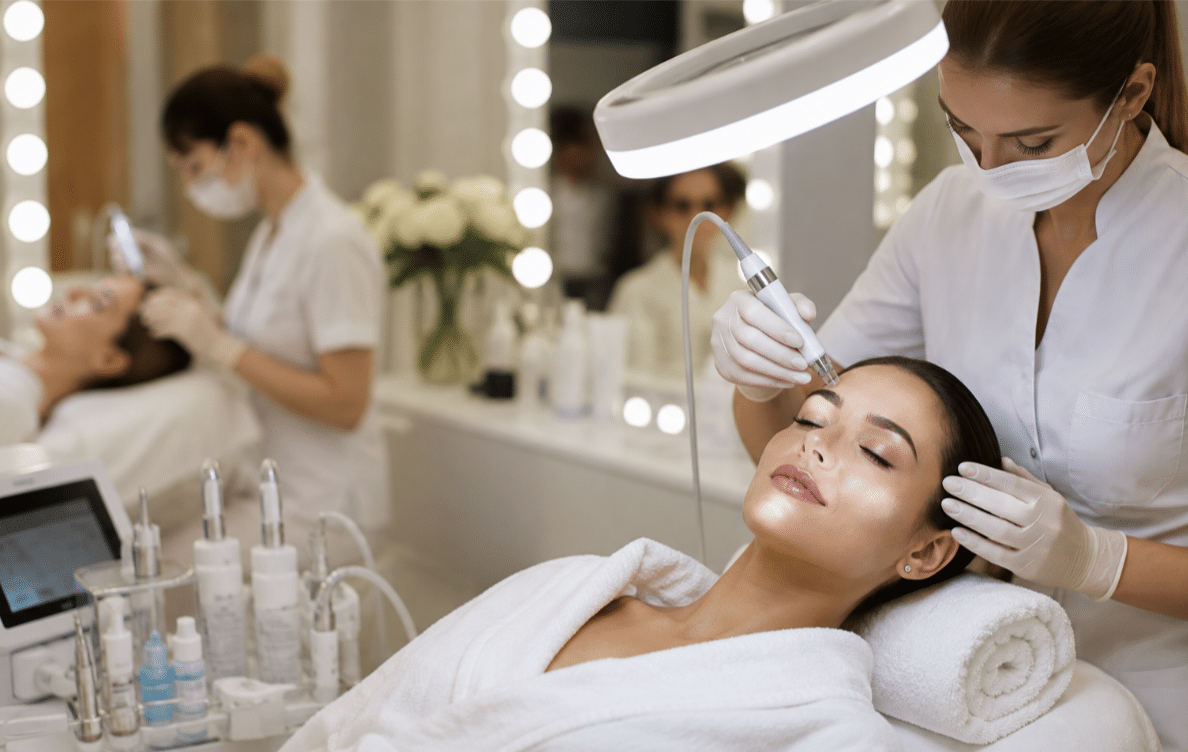 For years, “skin care” quietly meant “face care.” That’s shifted. Backless dresses, cropped fits, and high-definition red-carpet photography mean the chest, back, and shoulders now get the same scrutiny a face used to get alone.
This is where body pimples treatment has moved from an afterthought to a planned part of the routine. Breakouts on the back and chest behave differently from facial acne — thicker skin, denser oil glands, and clothing friction all play a role. To implement this properly, dermatologists typically treat the body as its own case, not a smaller copy of the face plan.
A clinical approach to body acne usually layers a few tools together rather than relying on one product:
The American Academy of Dermatology’s updated acne management guidelines note that acne affects the large majority of adolescents and frequently continues into adulthood, especially in women, which is part of why body breakouts aren’t a “just wash more” problem for so many people. Anecdotally, in clinic settings, patients dealing with body pimples for years often say the same thing once a proper plan is in place: they wish they’d stopped trying to “wait it out” much sooner. [Placeholder — replace with a specific, verified patient outcome or case example once confirmed by the treating dermatologist, per clinic policy on unverified claims.]
None of this is exclusive to celebrities. It’s simply that celebrities have the budget and access to start early, which is a fair thing to be honest about.
The term “celebrity dermatologist in Bangalore” gets searched a lot, and understandably so — the city has a dense, competitive aesthetic medicine scene. What actually matters isn’t a client list; it’s whether the dermatologist runs a documented, protocol-based approach rather than a one-off treatment menu.
A few practical questions to ask before booking a first consultation: Is the treatment plan built around your specific skin type and history, or is it a standard package sold to everyone? Will a licensed dermatologist be involved in ongoing decisions, not just the first visit?
[Placeholder — insert a specific, live-verified link to a Kosmoderma clinical or body-acne service page here, confirmed before publishing per internal linking policy.]
Consistency is the actual celebrity secret, not any single product or device. A realistic starting point is picking one or two clinically backed steps — a retinoid, a body-specific cleanser, or a scheduled peel — and giving them months, not days, before judging results.
If body breakouts have been a long-running issue rather than an occasional flare-up, that’s usually the signal to get a professional opinion instead of continuing to self-treat. A short consultation can clarify whether the issue is acne, folliculitis, or something else entirely, which changes the entire treatment approach.
What’s the one skin habit you’ve been meaning to start for months but keep putting off? Drop it in the comments — sometimes naming it is the push that actually gets it done.
P.S. Before you zip off to your next Internet pit stop, check out these 2 game changers below - that could dramatically upscale your life.
1. Check Out My Book On Enjoying A Well-Lived Life: It’s called "Your To Die For Life: How to Maximize Joy and Minimize Regret Before Your Time Runs Out." Think of it as your life’s manual to cranking up the volume on joy, meaning, and connection. Learn more here.
2. Life Review Therapy - What if you could get a clear picture of where you are versus where you want to be, and find out exactly why you’re not there yet? That’s what Life Review Therapy is all about.. If you’re serious about transforming your life, let’s talk. Learn more HERE.
Think about subscribing for free weekly tools here.
No SPAM, ever! Read the Privacy Policy for more information.
