 This article explains the meaning of A1C numbers, how A1C levels are determined, and what these results indicate about long-term blood sugar management and overall health. It provides clear information to help readers interpret their results with accuracy and confidence.
The term “A1C” describes a specific blood test that shows how your body has managed blood sugar over a longer period of time. Unlike a single, momentary glucose reading from a finger-stick, the A1C Levels Chart & Ranges displays blood sugar patterns that develop over time, measuring ongoing glycemic control rather than providing an instant snapshot. This approach supports you and your healthcare provider in understanding your overall health and identifying potential risks. Although interpreting results may seem complex, learning about their scientific background helps make the information practical and easier to use for managing your health decisions.
How A1C differs from routine daily readings
Many people monitor their blood sugar using home devices that provide glucose levels at a single moment during the day. These spot checks can vary based on meals, activity, stress, or sleep, but only show part of the overall picture. In contrast, the A1C test estimates the average blood sugar over two to three months, giving a more comprehensive assessment.
This longer observation window means that brief changes, such as a single day of high or low readings, are unlikely to affect your A1C result significantly, while ongoing patterns of change will be reflected. For instance, two people may have similar finger-prick readings during the day, but if one person experiences more variation overnight or at different times, their A1C readings may differ, highlighting different levels of long-term control.
Healthcare professionals often use the A1C test to identify trends and patterns that may not be visible with daily monitoring alone. When you review your A1C level, you are looking at a summary of your glucose management over time rather than at individual events.
Understanding this difference helps make sense of discrepancies between daily device numbers and laboratory A1C outcomes. Both types of measurements are important, but they offer different perspectives on your metabolic health.
What the test measures inside your body
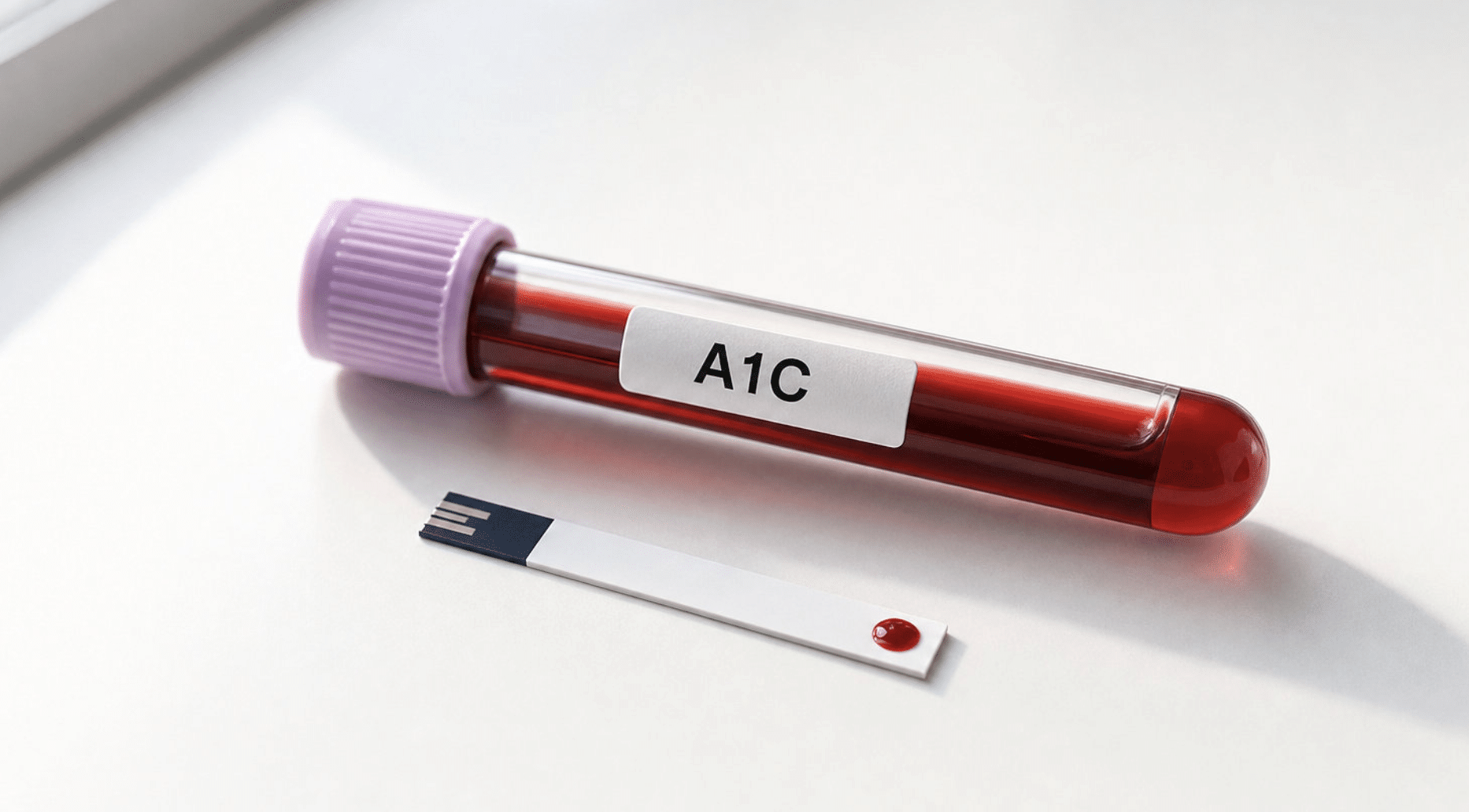
The A1C test measures glycated hemoglobin, a form of the hemoglobin protein in your red blood cells that has glucose attached to it. This percentage shows how much of your hemoglobin has been exposed to glucose over time, and it reflects your average blood sugar across two to three months.
Because red blood cells have a typical life span of about three months, the A1C percentage corresponds to glucose exposure during their existence. This makes the A1C test a reliable indicator of longer-term metabolic trends rather than brief fluctuations.
While the A1C test gives a broad picture, it does have some limitations. Recent, rapid changes in blood sugar may not appear in your results, and rare conditions that affect red blood cell life span could alter the accuracy of the result. Despite these limitations, the A1C test remains a commonly used standard for tracking diabetes and identifying health risks related to blood sugar management.
Combining your A1C result with daily readings and seeking guidance from a healthcare professional gives a clearer understanding of your overall health.
How ranges are set and why contexts matter
A1C target ranges are determined through population-based studies that assess health outcomes. Medical experts analyze large sets of data to decide which A1C levels are typically associated with a lower risk of complications. These ranges are revised when new evidence or updated best practices become available.
Health authorities and professional organizations review research to define what is considered normal, at risk, or above target for most people. However, these established ranges are not one-size-fits-all. Personal factors such as age, overall health, and any other medical conditions mean the interpretation of your A1C should be individualized.
Your healthcare provider may recommend a specific target range suited to your unique history and requirements. Factors like a history of cardiovascular disease, kidney function, or types of medication can all play a role in modifying advised targets. Recognizing that these ranges guide but do not strictly determine your personal goals is important for understanding your results.
As updated research and professional training continue, clinical interpretation of these numbers may change. If you have any questions regarding your individual A1C goal, discuss them with your clinician to ensure they are tailored for you.
Why your A1C results may differ from expectations
Sometimes, your A1C number might not match your expectations based on recent lifestyle changes or home glucose readings. Adjustments such as changes in diet or a new exercise program might take time to show up, since the A1C test reflects blood sugar trends over the previous months.
Medication changes or shifts in your regular routine may also influence results, though the impact can be delayed. Some medications require several weeks before affecting your average blood sugar. If you have questions about how recent changes may be influencing your numbers, tracking these adjustments and discussing them with your healthcare provider is helpful.
Illness, infection, disrupted sleep, and emotional stress can temporarily affect your ability to regulate blood sugar. Recovering from illness or periods of high stress can cause temporary changes in your results. Keeping track of significant life events can help you and your provider interpret your A1C outcome with greater context.
Individual biological differences, including variations in red blood cell turnover, can also result in small discrepancies in your A1C. Laboratory measurement variations are rare but possible. Bringing these factors to your healthcare team’s attention can help clarify what your result means for your specific situation.
Interpreting A1C as constructive information
It is natural to feel concerned when your A1C result falls outside your desired range. However, A1C numbers should be considered feedback for your health management rather than personal judgment. Interpreting the results as data allows you to identify next steps and focus on ongoing improvement instead of self-criticism.
Discussing your A1C result with your healthcare provider as a shared process can be helpful. Asking about the meaning behind your result, understanding how various events and daily measurements combine, and seeking clarification will help you develop confidence and stay engaged in your health care.
Tracking patterns in your A1C over time gives you and your provider useful information for planning future steps. Persistent trends carry more significance than isolated results. Keeping your approach practical encourages steady progress without unnecessary stress.
Using the A1C as one tool in ongoing health management supports a constructive and informed approach to well-being. This focus can help you build lasting habits and insights over time.
Lifestyle foundations for influencing future results
Key health habits such as diet, physical activity, sleep, and stress management all have an effect on blood sugar patterns over time. Because A1C reflects cumulative glucose exposure, making consistent habits leads to more meaningful changes than short-term efforts. Any lifestyle modifications should align with your personal health conditions and medical advice from your care team.
Following up on A1C outcomes includes reviewing and adjusting your routines with practical and sustainable choices. Many people find that regular discussions with a clinician help track progress and identify changes that are effective. Over time, this process supports a better understanding of the A1C levels chart & ranges and helps set realistic goals, especially when combined with information from the Complete A1C to Blood Sugar Chart.
P.S. Before you zip off to your next Internet pit stop, check out these 2 game changers below - that could dramatically upscale your life.
1. Check Out My Book On Enjoying A Well-Lived Life: It’s called "Your To Die For Life: How to Maximize Joy and Minimize Regret Before Your Time Runs Out." Think of it as your life’s manual to cranking up the volume on joy, meaning, and connection. Learn more here.
2. Life Review Therapy - What if you could get a clear picture of where you are versus where you want to be, and find out exactly why you’re not there yet? That’s what Life Review Therapy is all about.. If you’re serious about transforming your life, let’s talk. Learn more HERE.
Think happier. Think calmer.
Think about subscribing for free weekly tools here.
No SPAM, ever! Read the Privacy Policy for more information.
One last step!
Please go to your inbox and click the confirmation link we just emailed you so you can start to get your free weekly NotSalmon Happiness Tools! Plus, you’ll immediately receive a chunklette of Karen’s bestselling Bounce Back Book!