Your brain has a browser problem. Too many tabs open. One is replaying that awkward thing you said in 2019. Another is previewing next week’s meeting. A third is just anxiety, humming in the background like an ad you cannot close.
Now here is the interesting part. You cannot simply order those tabs to close. Anyone who has been told to “just relax” knows that relaxing on command is about as easy as falling asleep because someone yelled “sleep!” at you.
But you can crowd the tabs out. And one of the most reliable ways to do that has nothing to do with meditation apps or expensive retreats. It is making things with your hands.
Why Your Brain Loves Making Things
When you paint, stitch, sculpt, or sketch, something sneaky and wonderful happens. Your attention narrows to the tip of a brush. The color spreading across wet paper becomes the most important event in the universe. And the worry tabs, starved of attention, start closing themselves.
Psychologists call this state “flow.” It is that feeling of being so absorbed in a task that time goes wobbly and your inner critic finally takes a lunch break. Researchers have found that flow states are strongly linked with lower anxiety and higher wellbeing. Your grandmother, who knitted through every family crisis, did not need the research. She just knew.
Creative work is especially good at producing flow because it hits a sweet spot: engaging enough to hold your attention, gentle enough not to stress you out. Your to do list cannot compete with cadmium yellow.
The Science Bit (Because Your Anxious Brain Loves Evidence)
This is not just a pleasant theory. In a study from Drexel University, researchers measured cortisol, the body’s main stress hormone, before and after 45 minutes of art making. Around 75 percent of participants showed meaningfully lower cortisol afterward.
Here is the kicker: skill level made no difference. The experienced artists and the total beginners got the same benefit. Your inner perfectionist, who insists you cannot start until you are already good, has officially lost this argument.
Other research connects hands-on creative hobbies with improved mood, better focus, and even a buffer against burnout. The repetitive, rhythmic motions involved in painting or stitching seem to work a little like meditation, except you get a picture at the end instead of a sore back.
What Counts as a Creative Hobby? (More Than You Think)
Before you protest that you are “not a creative person,” let us widen the definition. Creative hobbies are not limited to painting like Monet. They include embroidery, doodling, baking bread, arranging flowers, coloring, journaling, pottery, and knitting scarves nobody asked for.
The common ingredient is simple: your hands are busy, your senses are engaged, and something exists at the end that did not exist before. That is it. That is the whole entry requirement.
In fact, the “non-creative” people often get the biggest boost, because they are the ones whose minds have been living exclusively in spreadsheets and worry loops. If your brain has been running on words and numbers all week, an hour of color and texture is not a luxury. It is a course correction.
Why “Just Be Creative” Feels Impossible (And What to Do Instead)
So if creativity is such great medicine, why do most of us not take it?
Because a blank page is terrifying. When you are already anxious, staring at an empty canvas does not soothe you. It hands your inner critic a microphone. What do I make? What if it is ugly? Who do I think I am, Picasso?
The fix is beautifully simple: start with structure. Give your brain a container, and creativity stops feeling like a test.
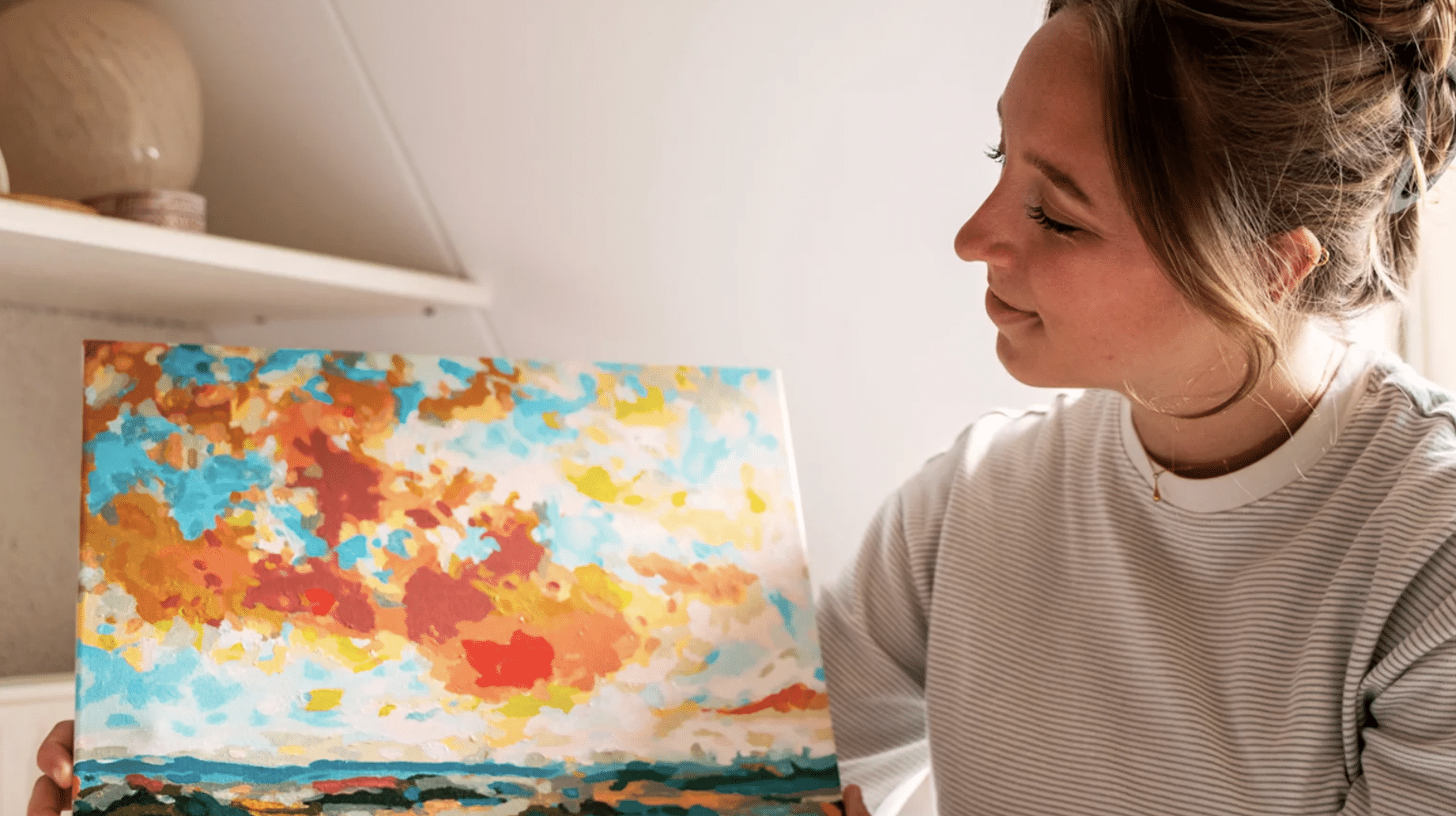
This is exactly why so many anxious overthinkers are turning to paint by numbers for stress relief. It gives you the calm of painting without the panic of deciding what to paint. Every decision is already made. You match colors to numbers, one small shape at a time, and your mind settles into the same soothing rhythm as a good long exhale. It is meditation for people who cannot sit still, disguised as an art project.
Structure is not cheating. It is a ramp. Plenty of people start with guided projects and later wander happily into freestyle painting, once their brain has learned that making things is safe.
Make It Stupidly Easy to Start
Now, a warning. Your brain will try to turn this healthy new habit into another performance. Do not let it. The goal here is calm, not a gallery show.
A few rules to protect your new hobby from your own ambition:
Keep sessions short. Fifteen minutes counts. You are not training for the creativity Olympics.
Leave your supplies out. A kit that lives in a drawer is a kit that stays in a drawer. Visible supplies whisper “come play” every time you walk past.
Lower the stakes on purpose. Tell yourself you are making something ugly on purpose. It is amazing how fast the pressure evaporates and how often the “ugly” thing turns out lovely.
Never compare your page to the internet. Social media is where beginners go to feel bad about being beginners. Your painting does not need an audience. It already did its job the moment it calmed you down.
The Real Masterpiece Is Your Nervous System
Here is the reframe that changes everything. The point of a creative hobby is not the painting, the embroidery hoop, or the slightly lopsided clay bowl. Those are souvenirs.
The real product is what happens inside you while you make them. A slower heartbeat. A quieter mind. An hour where you were a person making something, instead of a person managing everything.
So this week, give your anxious brain a brush instead of another browser tab. Set out some colors, follow the numbers if you like, and let your hands do what hands have done for thousands of years: make something, and make their owner feel better in the process.
Your open tabs will still be there afterward. You will just be far better equipped to close them.
P.S. Before you zip off to your next Internet pit stop, check out these 2 game changers below - that could dramatically upscale your life.
1. Check Out My Book On Enjoying A Well-Lived Life: It’s called "Your To Die For Life: How to Maximize Joy and Minimize Regret Before Your Time Runs Out." Think of it as your life’s manual to cranking up the volume on joy, meaning, and connection. Learn more here.
2. Life Review Therapy - What if you could get a clear picture of where you are versus where you want to be, and find out exactly why you’re not there yet? That’s what Life Review Therapy is all about.. If you’re serious about transforming your life, let’s talk. Learn more HERE.
Think happier. Think calmer.
Think about subscribing for free weekly tools here.
No SPAM, ever! Read the Privacy Policy for more information.
50% Complete
One last step!
Please go to your inbox and click the confirmation link we just emailed you so you can start to get your free weekly NotSalmon Happiness Tools! Plus, you’ll immediately receive a chunklette of Karen’s bestselling Bounce Back Book!


 Your brain has a browser problem. Too many tabs open. One is replaying that awkward thing you said in 2019. Another is previewing next week’s meeting. A third is just anxiety, humming in the background like an ad you cannot close.
