

Get A Sneak Peek at my book “Your To-Die-For Life”!
Get a FREE sneak peek! Learn how to use Mortality Awareness as a wake up call to live more boldly.


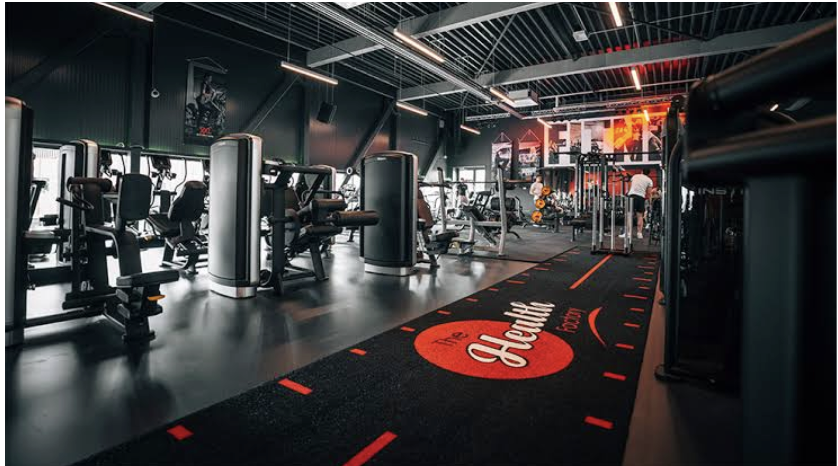 The fitness industry has changed dramatically over the past decade. Social media, bodybuilding communities, online fitness influencers, and increasingly accessible research information have transformed the way people learn about muscle building, body composition, training, and performance.
One of the most controversial developments within this culture has been the growing interest in SARMs, or Selective Androgen Receptor Modulators.
Searches for terms such as SARMs for fitness, SARMs bodybuilding, best SARMs brands, and SARMs reviews have become increasingly common online. At the same time, companies operating in the research-chemical market, including names such as DutchSarm and SwissSarms, have become part of online discussions surrounding product information, laboratory testing, and supplier reputation.
But what exactly is driving the popularity of SARMs, and what should fitness enthusiasts understand before believing everything they see online?
This article explores the rise of SARMs in modern fitness culture, the role of social media, the research behind these compounds, supplier transparency, and the important distinction between research chemicals and approved medicines.
SARMs stands for Selective Androgen Receptor Modulators.
These compounds were developed as experimental substances designed to interact with androgen receptors. Researchers have investigated SARMs for potential applications involving muscle wasting and other conditions where androgen signaling may be relevant.
Their popularity in fitness culture comes largely from the idea that SARMs may provide anabolic effects while being more selective than traditional anabolic steroids.
That concept has made SARMs particularly attractive to some people interested in bodybuilding and physique development.
However, the scientific and regulatory reality is considerably more complicated.
The FDA states that SARMs are not approved and warns that products marketed as SARMs can pose serious health risks, including liver injury and potentially increased risks of heart attack and stroke.
This distinction is important: popularity within fitness culture does not mean medical approval or established safety.
Several factors have contributed to the rise of SARMs.
Social media has completely changed fitness marketing.
Platforms allow fitness influencers, bodybuilding personalities, and online communities to share training routines, physique transformations, supplement discussions, and performance-related content with millions of viewers.
SARMs have benefited from this environment.
The FDA specifically warns that social-media posts and influencers have contributed to the promotion and availability of SARMs, particularly among teenagers and young adults.
A transformation photograph can make a substance appear much more convincing than a scientific paper.
That creates an important problem: social media usually shows the result someone wants you to see, not the complete scientific or medical context.
Modern fitness culture often emphasizes rapid transformation.
People see dramatic physiques online and may wonder how quickly similar results can be achieved.
This has created demand for products marketed around muscle development, strength, body composition, and athletic performance.
SARMs have entered this conversation because they are frequently marketed as alternatives to traditional anabolic steroids.
However, the FDA warns against treating SARMs as a quick or easy route to improved physical appearance or athletic performance.
Another factor is availability.
Unlike many traditional pharmaceutical products, research chemicals can be encountered through online stores and specialist websites.
This accessibility has helped SARMs move from relatively niche research discussions into mainstream fitness conversations.
Research published on SARMs and the fitness/bodybuilding scene has also described their growing popularity through online shops and social-media communities.
Bodybuilding has always involved experimentation.
From traditional supplements to advanced training systems, competitors and recreational lifters continually search for ways to improve their physiques.
SARMs represent a newer chapter in that culture.
Unlike conventional supplements such as protein powder or creatine, SARMs interact with biological systems in a much more direct way.
That is why they should not be treated as ordinary sports supplements.
The FDA explicitly states that SARMs marketed as bodybuilding products are not dietary supplements and have not been reviewed for safety and effectiveness as approved drugs.
This is an important distinction for anyone researching SARMs and bodybuilding.
As interest has grown, so has the number of websites offering research chemicals.
People researching SARMs brands may encounter companies such as DutchSarms and SwissSarms alongside numerous other suppliers.
However, comparing suppliers requires more than looking at website design or product catalogs.
A responsible SARMs brand review should examine:
These factors are particularly important because online availability does not establish product quality.
DutchSarms is a name that may appear when people research European SARMs suppliers.
When evaluating DutchSarms—or any similar supplier—the most useful approach is to examine available documentation rather than relying exclusively on marketing claims.
For example, researchers can investigate whether individual products have identifiable batch information and whether laboratory documentation corresponds to those batches.
A Certificate of Analysis can provide useful analytical information, but it should be interpreted carefully.
A generic certificate does not necessarily demonstrate that every batch sold by a company has identical characteristics.
Likewise, customer testimonials can provide information about purchasing experiences but cannot independently prove chemical identity or purity.
Therefore, a balanced DutchSarms review should separate customer-service reputation from laboratory evidence.
SwissSarms is another name encountered in discussions about SARMs and research chemicals.
As with DutchSarms, the most useful way to evaluate SwissSarms is through objective criteria.
Researchers interested in SwissSarms reviews can examine questions such as:
These questions are more meaningful than simply asking whether a company is “good” or “bad.”
A professional review should also acknowledge what cannot be independently verified.
One of the biggest challenges in the online research-chemical market is determining exactly what a product contains.
Packaging cannot establish chemical identity.
A product description cannot independently establish purity.
And a customer review cannot substitute for laboratory analysis.
This is why laboratory testing has become an important topic in SARMs discussions.
When reviewing a Certificate of Analysis, researchers should look for:
The chemical tested should be clearly identified.
The report should ideally correspond to a specific batch.
The date provides context about when the material was analyzed.
The testing organization should be identifiable.
The report should explain, where appropriate, how the sample was analyzed.
A detailed report is generally more informative than a simple “passed” statement.
These principles apply equally when comparing DutchSarms, SwissSarms, or any other supplier.
The internet contains thousands of SARMs-related reviews.
But not all reviews provide the same type of information.
A customer might say:
Those comments can be useful for evaluating the purchasing experience.
However, statements about chemical purity, effectiveness, or safety require substantially stronger evidence.
A person cannot determine laboratory purity simply from how they felt after using a product.
This is why SARMs brand reviews should distinguish anecdotal experiences from analytical evidence.
Influencer marketing has played an important role in the growth of SARMs culture.
A fitness personality with an impressive physique can have enormous influence over followers.
But physique alone cannot tell an audience:
The FDA has specifically warned about social-media promotion of SARMs and the way these products can be presented as easy solutions for gaining muscle or improving appearance.
Consumers should therefore approach influencer claims with the same skepticism applied to any other form of health marketing.
The answer depends on jurisdiction and intended use, so broad statements such as “SARMs are completely legal” or “SARMs are illegal everywhere” are misleading.
In the United States, the FDA states that SARMs are unapproved drugs and cannot legally be marketed as dietary supplements or approved drugs.
This is particularly important because some websites use terms such as “research only” or “not for human consumption.”
Those labels do not automatically resolve regulatory questions.
The FDA has taken enforcement action where websites marketed SARMs in ways that indicated intended human use despite research-use disclaimers.
Anyone researching SARMs should therefore check the regulations applicable to their own country.
Competitive athletes have another major consideration: anti-doping rules.
SARMs are included among prohibited anabolic agents under the World Anti-Doping Agency’s prohibited-substances framework. The 2026 WADA list includes SARMs such as andarine, enobosarm (ostarine), LGD-4033 (ligandrol), RAD140, S-23, and YK-11.
For competitive athletes, this means that researching or purchasing a SARM is not simply a question of fitness culture.
Anti-doping consequences can also be relevant.
Athletes should always consult the current rules of their governing organization and obtain professional guidance where appropriate.
Perhaps the most important lesson from the rise of SARMs is the difference between popularity and evidence.
A compound can be popular without being proven safe.
A product can have thousands of online searches without being an approved medicine.
A supplier can have positive customer reviews without independent confirmation of every product’s contents.
And a fitness influencer can have an impressive physique without providing reliable medical information.
Scientific evidence requires controlled research, appropriate analysis, and careful interpretation.
That is fundamentally different from social-media testimonials.
For people interested in improving their physique, the fundamentals of fitness remain important regardless of the online popularity of SARMs.
Training consistency, adequate nutrition, sufficient sleep, progressive resistance exercise, and appropriate recovery form the foundation of physical development.
SARMs should not be presented as a substitute for those fundamentals.
The popularity of a compound should never become a reason to ignore its risks or regulatory status.
The discussion around SARMs is unlikely to disappear.
As social media continues to influence fitness culture, people will continue searching for information about SARMs, research chemicals, bodybuilding products, and suppliers.
This makes accurate education increasingly important.
Future discussions will likely focus more heavily on:
Brands such as DutchSarms and SwissSarms will continue to be part of the broader online conversation around SARMs suppliers, but consumers should evaluate any supplier using evidence rather than marketing claims.
The rise of SARMs in modern fitness culture is a reflection of several larger trends: the influence of social media, the demand for rapid physical transformation, the accessibility of online research chemicals, and the growing interest in alternatives to traditional performance-enhancing drugs.
However, increased popularity does not eliminate the risks.
The FDA continues to warn that SARMs are unapproved and have been associated with serious adverse effects, including liver injury and potentially increased cardiovascular risks.
For anyone researching SARMs, brands such as DutchSarms and SwissSarms should be considered through the lens of transparency, documentation, laboratory testing, and regulatory information—not simply popularity or influencer endorsements.
The most responsible approach to SARMs content is therefore not to glorify or demonize the category, but to provide accurate information.
Fitness culture will continue to evolve. The challenge is making sure that the information surrounding that evolution evolves with it.
P.S. Before you zip off to your next Internet pit stop, check out these 2 game changers below - that could dramatically upscale your life.
1. Check Out My Book On Enjoying A Well-Lived Life: It’s called "Your To Die For Life: How to Maximize Joy and Minimize Regret Before Your Time Runs Out." Think of it as your life’s manual to cranking up the volume on joy, meaning, and connection. Learn more here.
2. Life Review Therapy - What if you could get a clear picture of where you are versus where you want to be, and find out exactly why you’re not there yet? That’s what Life Review Therapy is all about.. If you’re serious about transforming your life, let’s talk. Learn more HERE.
Think about subscribing for free weekly tools here.
No SPAM, ever! Read the Privacy Policy for more information.
