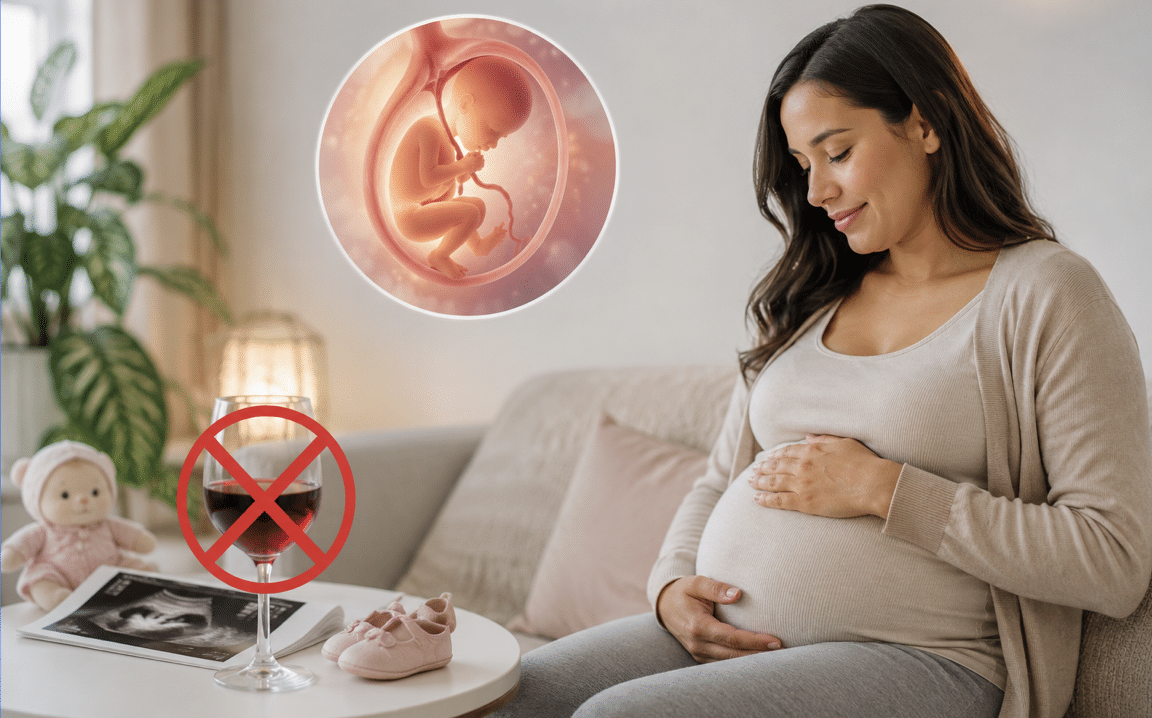
 You have just seen two lines on a pregnancy test. The excitement is immediate, but then another thought arrives: “I had a few drinks at a wedding last week. Could that have harmed my baby?” For some women, the concern begins differently, perhaps when a relative insists that an occasional glass of wine is harmless.
Neither panic nor casual reassurance provides the clarity you need. A foetal medicine consultation can help you discuss the exposure honestly, understand what prenatal care can monitor and take protective steps from this point forward. The most useful place to begin is with one clear rule about alcohol during pregnancy.
Is any amount of alcohol safe during pregnancy?
There is no known safe quantity, safe stage or safe type of alcohol during pregnancy. Wine, beer, spirits and alcohol-containing cocktails can all expose a developing baby to alcohol. It passes through the pregnant woman’s bloodstream to the baby, whose developing body cannot process it in the same way an adult can.
Alcohol exposure during pregnancy may increase the risk of miscarriage, premature birth, stillbirth and a group of lifelong conditions known as foetal alcohol spectrum disorders, or FASD. Fetal Alcohol Syndrome, or FAS, represents the more severe end of this spectrum and may affect growth, the nervous system, facial development, learning and behaviour.
The safest approach is therefore straightforward:
Do not drink alcohol when pregnant, trying to conceive or when there is a possibility that you may be pregnant.
What if you drank before knowing you were pregnant?
First, stop drinking from the moment you discover the pregnancy. Do not assume that harm has definitely occurred, but do not hide the exposure because you feel embarrassed or fear being judged.
A fetal medicine specialist will need accurate information to guide your monitoring. Tell the doctor:
- What type of alcohol you consumed
- Approximately how much you drank
- Whether it happened once or repeatedly
- When it occurred in relation to your pregnancy
- Whether you are finding it difficult to stop
Your pregnancy specialist doctor can record this information, review your overall health and plan appropriate antenatal follow-ups. Stopping at any stage is beneficial because the baby’s brain continues developing throughout pregnancy. Regular prenatal appointments are also important after an early or accidental exposure.
What not to do
- Do not search online for a “safe limit” that justifies continued drinking.
- Do not compare your pregnancy with someone who drank and had a healthy baby.
- Do not skip appointments because you are afraid of what the doctor may say.
- Do not blame yourself for drinking before you knew you were pregnant.
- Do not attempt to stop heavy, dependent alcohol use without medical support.
Every pregnancy responds differently, which is why one person’s experience cannot predict another’s outcome.
Can a scan detect Fetal Alcohol Syndrome?
This is one of the most important questions to discuss during your appointment.
Ultrasound examinations can help doctors monitor the baby’s growth, organs and visible structural development. However, a normal scan cannot promise that alcohol exposure has had no effect. Learning, attention, behaviour and memory concerns may become apparent only as a child grows.
There is no single blood test, scan or other medical test that can independently diagnose or rule out all foetal alcohol spectrum disorders. Diagnosis generally considers prenatal exposure alongside physical, developmental and behavioural findings.
A consultation is therefore not about looking for instant certainty. It is about arranging appropriate monitoring, receiving reliable guidance and avoiding further exposure.
Make prevention easier in everyday situations
Avoiding alcohol may sound simple until social pressure, habits or confusing labels enter the picture. A practical plan can make the decision easier to maintain.
|
Situation
|
A helpful response
|
|
Someone offers you a drink
|
“No, thank you. I am avoiding alcohol during pregnancy.”
|
|
A relative says one glass is safe
|
“My doctor has advised complete avoidance.”
|
|
You are attending a celebration
|
Choose a clearly labelled alcohol-free drink in advance
|
|
You use alcohol to relax
|
Replace the routine with a walk, warm shower, music or breathing exercise
|
|
Your partner drinks at home
|
Ask them not to offer alcohol or leave it visibly accessible
|
|
You are unsure about a product
|
Check the label or ask your maternity care team
|
Be cautious with beverages described as “low alcohol”. “Alcohol-free” and “non-alcoholic” labelling can vary between products, so check the stated alcohol content rather than relying only on the product name.
What if stopping feels difficult?
Difficulty stopping is a health concern, not a character flaw. Tell your obstetrician or maternity care team as early as possible. Healthcare professionals can connect you with counselling, addiction support and a safe, individualised care plan.
Alcohol use during pregnancy should be approached through education, treatment and compassionate support rather than shame or punishment.
You may need additional help if you:
- Drink daily or most days
- Feel anxious, shaky or unwell without alcohol
- Use alcohol to sleep or manage stress
- Have tried unsuccessfully to stop
- Hide how much you drink
- Feel that drinking is affecting your relationships or responsibilities
Do not wait until your next routine appointment when you are concerned about dependence. Contact your healthcare provider promptly.
Questions worth taking to your consultation
Before the appointment, note down your concerns so anxiety does not make you forget them.
Ask:
- What details about the exposure should I share?
- Does my pregnancy require additional growth or anomaly scans?
- What can prenatal examinations detect, and what can they not detect?
- Will this exposure change my antenatal appointment schedule?
- What symptoms should prompt an urgent review?
- Where can I receive confidential help if stopping is difficult?Fetal Medicine Doctor In India
- What should be documented for my child’s healthcare team after birth?
At a coordinated maternity and fetal medicine care such as BirthRight by Rainbow Hospitals, expectant parents can discuss how obstetric, foetal medicine and newborn teams may work together when a pregnancy needs closer observation.
Replace guilt with the next right step
Fetal Alcohol Syndrome is preventable when a developing baby is not exposed to alcohol. If you have not consumed alcohol during pregnancy, continue avoiding it. If you drank before discovering you were pregnant, stop now and share the details with your doctor. If you are struggling to stop, ask for support immediately.
You cannot change what happened before you knew, but you can protect your pregnancy through honest conversations, regular antenatal care and alcohol-free choices from today onwards.
Disclaimer: This article provides general information and does not replace personalised advice from a qualified maternity or foetal medicine professional.
P.S. Before you zip off to your next Internet pit stop, check out these 2 game changers below - that could dramatically upscale your life.
1. Check Out My Book On Enjoying A Well-Lived Life: It’s called "Your To Die For Life: How to Maximize Joy and Minimize Regret Before Your Time Runs Out." Think of it as your life’s manual to cranking up the volume on joy, meaning, and connection. Learn more here.
2. Life Review Therapy - What if you could get a clear picture of where you are versus where you want to be, and find out exactly why you’re not there yet? That’s what Life Review Therapy is all about.. If you’re serious about transforming your life, let’s talk. Learn more HERE.
Think happier. Think calmer.
Think about subscribing for free weekly tools here.
No SPAM, ever! Read the Privacy Policy for more information.
One last step!
Please go to your inbox and click the confirmation link we just emailed you so you can start to get your free weekly NotSalmon Happiness Tools! Plus, you’ll immediately receive a chunklette of Karen’s bestselling Bounce Back Book!


