 There is a moment that happens to nearly everyone who sticks with lifting. You pick up something that felt impossible six weeks ago, and it moves. Not easily, but it moves.
That moment does something odd to your head. It is not really about the weight. It is about watching yourself become a person who can do something you previously could not.
Most people start strength training for their arms or their metabolism. They keep going because of what it does to the way they walk into a room.
Key Takeaways
- Strength training builds psychological evidence, not just muscle, because every completed set is a promise you kept to yourself.
- Adults begin losing muscle mass from around age 30, and resistance training is one of the most reliable ways to slow and partly reverse that.
- Official guidance asks for muscle-strengthening work on just two days a week, which is far less than most people assume.
- Progress stalls when your equipment stops offering a next step, so plan for gradual increases from the beginning.
- Confidence tends to arrive before visible muscle does, usually within the first few weeks.
Strength Training Is Mindset Work Wearing Gym Clothes
Every finished set is a small, undeniable piece of proof. You said eight reps and you did eight reps. Nobody can argue with that, including the part of your brain that enjoys arguing.
This matters more than it sounds. Self-doubt survives on vague feelings, and it does not survive well against numbers written down in a notebook.
Over a few months those numbers build a case. You start trusting yourself elsewhere too, because you have been practising the exact skill of naming a target and hitting it.
What Quietly Happens When You Skip It
Muscle is not permanent. Harvard Health notes that after age 30 most people begin losing as much as 3% to 5% of their muscle mass per decade, and the losses become more noticeable after 60.
That decline shows up in small, irritating ways long before it becomes a medical conversation. Groceries feel heavier. Stairs feel longer. Getting up off the floor requires a strategy.
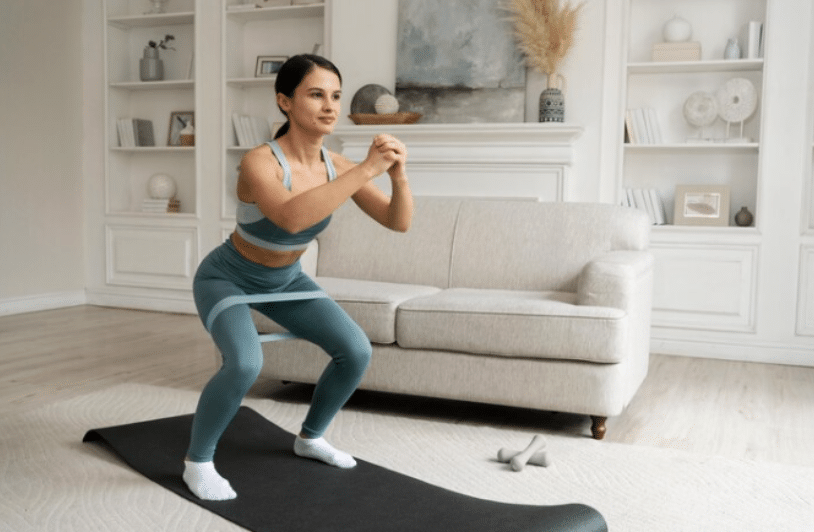
The encouraging part is that this is one of the most reversible declines in the body. Resistance training works at 35, at 55 and at 75, and a short list of home strength exercises is usually enough to start turning it around.
The catch is that most people never begin. The Physical Activity Guidelines for Americans report that roughly 80% of adults are not meeting the recommendations for both aerobic and muscle-strengthening activity.
Start Smaller Than You Think You Should
 The official recommendation is refreshingly modest. Adults are advised to do muscle-strengthening activities involving all major muscle groups on two or more days a week.
Two days. Not six. Not a ninety-minute session with a colour-coded wall chart.
You also do not need to grind yourself into the floor early on. Guidance based on the research suggests a single set of 8 to 12 repetitions per exercise is effective, although two or three sets may do more.
If you are unsure where to begin, four movements will cover you. Squats, presses, rows and lunges reach almost every major muscle group between them, and none of them require a complicated setup.
Keep the first sessions shorter than feels satisfying. Finishing while you still have energy left is what makes you willing to come back on Thursday, and willingness beats intensity for the first few months.
Why Progressive Loading Is the Part People Skip
Here is what nobody tells beginners. Your body adapts to whatever you ask of it, then it stops adapting, because you stopped asking for more.
This is why the three dumbbells you bought in a burst of enthusiasm eventually stop working. They were never the problem. The absence of a next step was.
Progressive overload simply means gradually increasing the demand, usually by adding weight. It is the most dependable driver of strength gains, and it needs equipment that can grow alongside you.
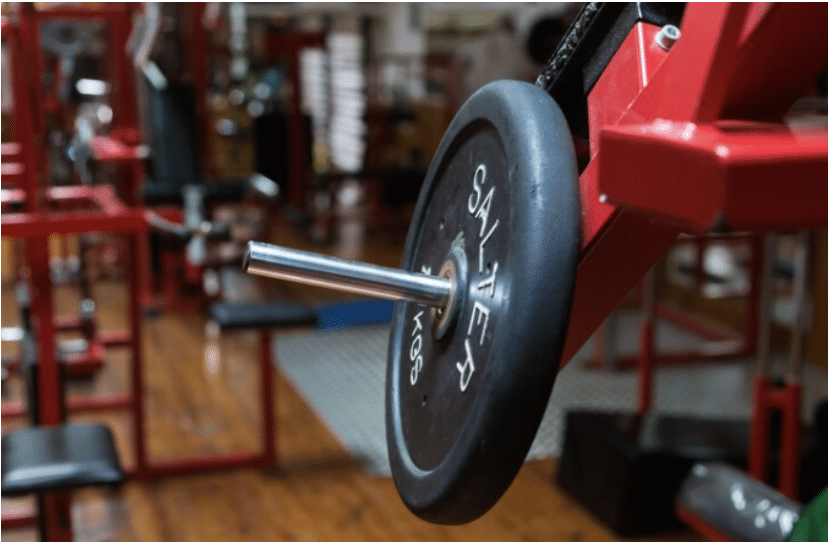
That is where a barbell setup earns its floor space. A well-chosen weight plate set gives you increments you can keep adding over months, so the bar that felt heavy in March becomes a warm-up by September.
Buying plates as a bundle also removes a decision you would otherwise make over and over. Australian supplier Kinta Fitness, for instance, offers matched plate bundles in 100kg, 140kg and 150kg totals, all made to the standard 50mm Olympic sleeve so they fit any 7ft Olympic bar, rack or weight tree.
Matched pairs matter more than people expect. Symmetrical loading lets you progress evenly across both sides of the bar, which protects your technique once the weight starts getting serious.
The Confidence Compounds Faster Than the Muscle
You will feel stronger before you look stronger. That is normal, and it is largely your nervous system getting better at recruiting the muscle you already have.
Which means the psychological return arrives early. Within a few weeks you tend to notice that you carry things differently, stand differently and hesitate less before physical tasks.
That spills over. People who lift consistently often describe handling stress better, sleeping better and feeling considerably less fragile about their bodies in general.
Make the Habit Boring on Purpose
The people who stay consistent with strength training are rarely the most motivated ones. They are the ones who made starting easy.
Same two days each week. Same short list of movements. Equipment left in plain sight rather than buried in a cupboard behind the Christmas decorations.
Track it somewhere simple. A notes app is plenty. The point is not the data, it is the running record of you turning up.
And give it longer than you would like to. Strength is slow for the first month and then it is not, and almost everyone quits during the slow part.
Give Yourself Something Solid to Stand On
Nobody starts lifting because they want a spreadsheet of numbers that go up. They start because something in them wants proof that they are not stuck.
The weights give you that proof faster than almost anything else, because the feedback is immediate and impossible to spin. Either the bar went up or it did not.
Two days a week, a handful of movements and enough load to keep the challenge honest. That is the whole recipe, and it will change more than your body.
Frequently Asked Questions
How often should I strength train as a beginner? Two days a week covering all the major muscle groups meets standard public health guidance and is enough to see real change. Leave at least a day between sessions that work the same muscles.
Do I need heavy equipment to get started? No. Bodyweight movements and a light pair of dumbbells will carry most people through the first couple of months comfortably. Adding loadable plates matters once bodyweight stops feeling challenging.
Will lifting weights make me bulky? Building significant muscle size takes years of deliberate training and eating aimed specifically at that outcome. For most people, consistent strength work produces a firmer, more capable body rather than a dramatically larger one.
Is it too late to start in my fifties or sixties? It is not. Muscle protein synthesis still responds to resistance training well into later life, and older adults often see some of the biggest functional improvements in balance and everyday strength.
How long before I notice a difference? Most people feel stronger within two to four weeks, mainly through improved neuromuscular efficiency. Visible changes usually take somewhere between eight and twelve weeks of consistent training.
What is the most common beginner mistake? Never increasing the load. Doing the same weight for the same reps for months is maintenance, not progress, so plan small increases from the start.
P.S. Before you zip off to your next Internet pit stop, check out these 2 game changers below - that could dramatically upscale your life.
1. Check Out My Book On Enjoying A Well-Lived Life: It’s called "Your To Die For Life: How to Maximize Joy and Minimize Regret Before Your Time Runs Out." Think of it as your life’s manual to cranking up the volume on joy, meaning, and connection. Learn more here.
2. Life Review Therapy - What if you could get a clear picture of where you are versus where you want to be, and find out exactly why you’re not there yet? That’s what Life Review Therapy is all about.. If you’re serious about transforming your life, let’s talk. Learn more HERE.
Think happier. Think calmer.
Think about subscribing for free weekly tools here.
No SPAM, ever! Read the Privacy Policy for more information.
One last step!
Please go to your inbox and click the confirmation link we just emailed you so you can start to get your free weekly NotSalmon Happiness Tools! Plus, you’ll immediately receive a chunklette of Karen’s bestselling Bounce Back Book!