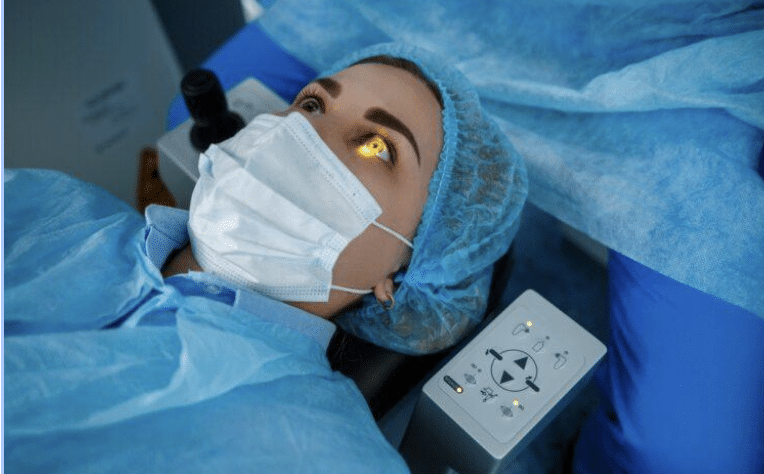
 In 2026, the most meaningful conversation around refractive surgery is no longer just about whether a patient can reach 20/20. It is increasingly about how sharply, comfortably, and consistently that vision feels in real life.
In 2026, the most meaningful conversation around refractive surgery is no longer just about whether a patient can reach 20/20. It is increasingly about how sharply, comfortably, and consistently that vision feels in real life. For readers researching LASIK eye surgery in Austin, the newest wave of innovation is less about one dramatic invention and more about a layered improvement in diagnostics, treatment planning, and postoperative expectations. Recent literature and specialist commentary point to topography-guided treatment, more detailed mapping of corneal irregularities, and stronger use of patient-reported outcomes as some of the clearest signs of that shift.[1][2][3]
That shift matters because many patients do not judge success only by the eye chart. They care about glare at night, contrast on a rainy road, comfort on a laptop-heavy workday, and whether vision feels crisp rather than merely acceptable. Modern LASIK discussions increasingly recognize that “quality of vision” is a real outcome, not a marketing phrase. Recent refractive literature has emphasized patient satisfaction, dry eye symptoms, and visual disturbances as meaningful endpoints alongside standard acuity measurements.[1][2]
Why more personalized mapping can make vision correction feel less one-size-fits-all
Personalized mapping is one of the most important themes in current refractive surgery. Topography-guided LASIK does not rely only on a glasses prescription. It also analyzes the corneal surface in greater detail, which can matter in eyes with asymmetry, irregularity, or higher-order aberrations. In a 2025 discussion on the changing refractive landscape, Ella Faktorovich, MD, described topography-guided Contoura LASIK as one of the most significant advances in refractive surgery because it helps isolate and treat corneal imperfections that may otherwise continue to affect postoperative quality of vision.[3]
That same theme appears in peer-reviewed studies. A 2023 prospective study evaluating patient-reported outcomes after topography-guided LASIK found very high patient satisfaction and argued that patient-reported measures add an important layer to understanding success beyond changes in visual acuity and corneal architecture.[1] A 2025 study of topography-guided LASIK planned with the Phorcides system similarly reported improved patient satisfaction, lower dry eye symptom scores, and fewer visual disturbances at three months after surgery.[2] These are not trivial findings. They suggest that better mapping may improve how patients experience their vision, not only how doctors record it.[1][2]
What smarter laser planning may do for clarity, contrast, and confidence
Smarter planning is becoming just as important as the laser itself. In practical terms, modern treatment design tries to account for how the cornea really behaves rather than assuming every astigmatic pattern is straightforward. That matters because a patient can measure a certain amount of cylinder in the clinic while also carrying higher-order aberrations that affect glare, halos, or subtle image quality. Refractive surgeons are increasingly using corneal data to refine that plan and reduce the mismatch between standard refraction and real-world optical performance.[3]
The improved outcomes reported with newer laser platforms also reinforce that trend. At AAO 2024, George Waring IV, MD, presented nine-month FDA data on the TECHNOLAS TENEO excimer laser, describing it as the first FDA-approved excimer laser in over a decade and reporting strong safety and efficacy findings, including gains in best-corrected vision and improvements in patient-reported quality measures such as glare and contrast sensitivity.[4] Those findings do not mean every patient will have the same result, but they do support the broader idea that modern LASIK is being judged on finer aspects of visual performance than before.[4][5]
How today’s technology aims to fine-tune results instead of just chasing 20/20
One of the biggest mindset changes in 2026 is that a good LASIK conversation is less about “Will I see the eye chart?” and more about “What kind of vision do I want for my life?” That question matters for people who drive at night, work under variable lighting, stare at screens all day, or notice subtle visual imperfections that others might ignore. Surgeons are increasingly discussing quality-of-vision goals because technology now makes those conversations more relevant.[1][3][4]
This is also why patient-reported outcomes matter so much. If a study shows excellent uncorrected acuity but patients still struggle with dry eye or nighttime phenomena, that is not the whole success story. Modern LASIK research is gradually becoming more patient-centered, and that is one of the healthiest innovations of all. Better outcomes are not just measured by numbers. Better outcomes are felt by the patient every day.[1][2]
What to ask if you want innovation that fits your eyes, not just the trend
The smartest question a patient can ask is not “What is the newest thing?” It is “What is the newest thing that fits my eyes?” Refractive experts continue to stress that there is no one-size-fits-all procedure. Corneal shape, dry eye status, pupil size, refractive error, work demands, and risk tolerance all influence whether a given technology is a good match. In recent specialist commentary, surgeons emphasized that choosing the right procedure for the right patient can matter more than the procedure name itself.[3]
Dr. Steven J. Dell captures that perspective well: “At Dell Laser Consultants, modern LASIK planning works best when detailed diagnostics, thoughtful customization, and the patient’s real visual goals all point in the same direction.” That is a broad statement, but it reflects the most important innovation trend of 2026. The best breakthrough is not a buzzword. The best breakthrough is a treatment plan that understands the individual eye.
LASIK innovation is becoming more personal. Better mapping improves more than numbers. Better planning can improve confidence, contrast, and comfort. The future of vision correction feels sharper because it is becoming more individualized.
References
[1] Rush SW, Rush RB, Topography-Guided LASIK: A Prospective Study Evaluating Patient-Reported Outcomes, 2023.[2] Brunson PB, Mann PM II, Hall B, Patient Reported Visual Outcomes, Dry Eye Symptoms, and Satisfaction Following Topography-Guided LASIK, 2025.[3] Faktorovich E, Koo E, Stevenson S, LASIK and Beyond: Navigating the Changing Landscape of Refractive Surgery, October 31, 2025.[4] Waring GO IV, AAO 2024: Myopic LASIK Performed Using a Novel Excimer Laser, October 20, 2024.[5] U.S. Food and Drug Administration, List of FDA-Approved Lasers for LASIK, updated 2025.
P.S. Before you zip off to your next Internet pit stop, check out these 2 game changers below - that could dramatically upscale your life.
1. Check Out My Book On Enjoying A Well-Lived Life: It’s called "Your To Die For Life: How to Maximize Joy and Minimize Regret Before Your Time Runs Out." Think of it as your life’s manual to cranking up the volume on joy, meaning, and connection. Learn more here.
2. Life Review Therapy - What if you could get a clear picture of where you are versus where you want to be, and find out exactly why you’re not there yet? That’s what Life Review Therapy is all about.. If you’re serious about transforming your life, let’s talk. Learn more HERE.
Think happier. Think calmer.
Think about subscribing for free weekly tools here.
No SPAM, ever! Read the Privacy Policy for more information.
One last step!
Please go to your inbox and click the confirmation link we just emailed you so you can start to get your free weekly NotSalmon Happiness Tools! Plus, you’ll immediately receive a chunklette of Karen’s bestselling Bounce Back Book!