 Losing a tooth changes how you eat, how you speak, and how you feel about yourself in a room full of people. Fortunately, dental implants have made it possible to address tooth loss in a way that looks, feels, and functions like natural teeth. But if you’ve never gone through the process before, it’s completely normal to wonder: what does it actually involve?
Here’s a clear, honest look at every phase — before, during, and after your procedure.
Before the Surgery
Before anything surgical happens, your oral surgeon will take time to fully assess your oral health. This typically includes dental X-ray procedures and, in many cases, a 3D scan of your jaw. These images help your care team evaluate bone density, identify nerve pathways, and plan exactly where implant placement should occur.
Your surgeon will also look for any signs of gum disease or bone loss, both of which can affect whether you’re immediately ready for implants or whether some preparatory work is needed first. This is also when your overall medical history gets reviewed, since certain health conditions and medications can influence healing.
Think of this phase as the blueprint stage. The more thorough it is, the smoother everything that follows tends to be. Come prepared with questions, and don’t hesitate to ask about anesthesia options, recovery timelines, and what to arrange at home before your procedure.
During the Surgery
For most patients, implant surgery is a straightforward outpatient surgical procedure. Here’s what typically unfolds:
Anesthesia is administered first. Local anesthesia is standard, and sedation is available for those with dental anxiety. Most patients report feeling pressure but minimal pain.
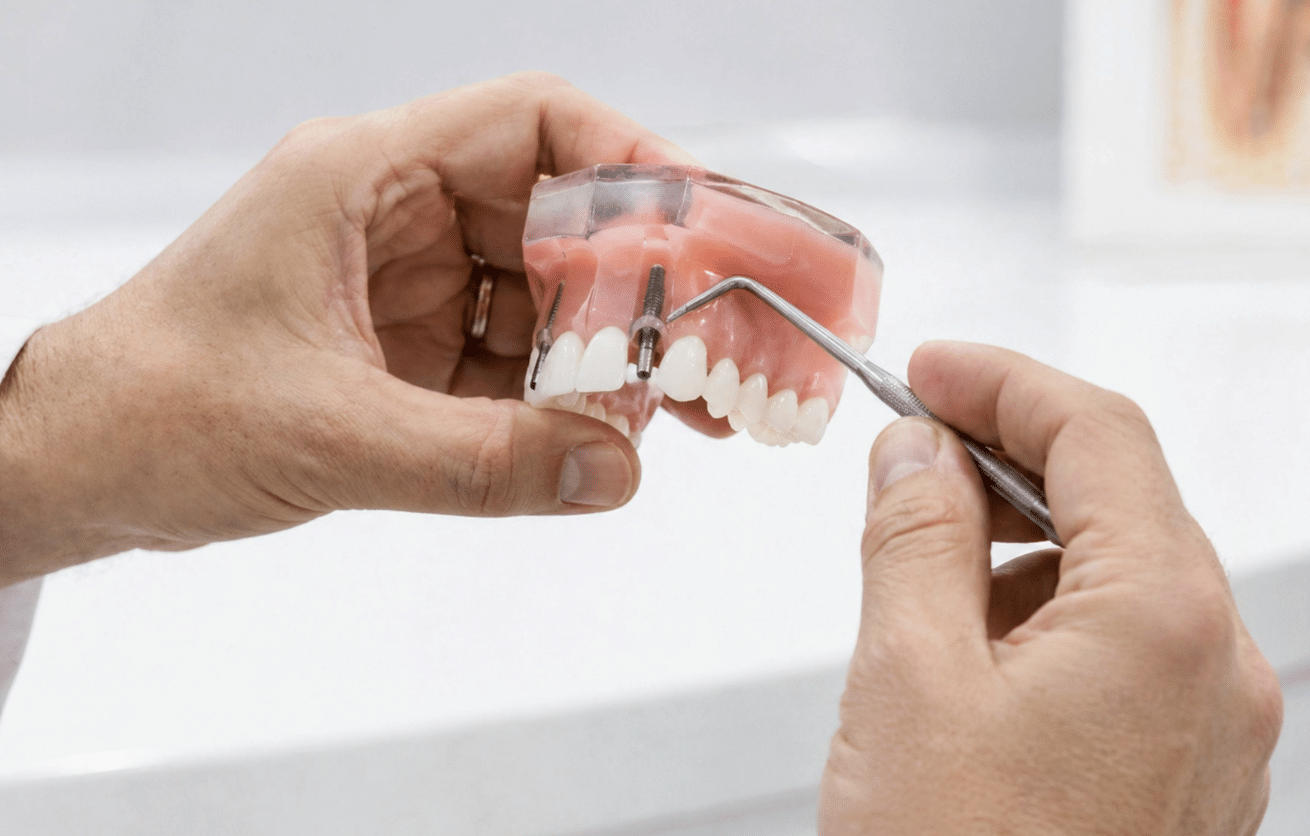
The implant is placed. Your surgeon makes a small incision in the gum, drills a precise channel into the jawbone, and carefully inserts a titanium implant, one of the most well-researched medical devices in modern dentistry, made from biocompatible, medical-grade titanium that the body accepts naturally. For patients with metal sensitivities, zirconium oxide implants offer a metal-free alternative with comparable strength.
Over the following weeks, the jawbone fuses around the implant in a process called osseointegration, giving it remarkable stability.
The crown is attached later. Once healing is confirmed, an implant crown (the visible, realistic-looking tooth cap) is connected to the post. At this point, the result closely mirrors a natural tooth in both appearance and function.
For patients needing a full-mouth restoration, some practices offer full-arch solutions that use just a few strategically placed implants to support what would otherwise require a full denture. Take https://coomsa.com/ as an example: their use of advanced guided implant technology means patients can expect a more precise, streamlined experience regardless of how many teeth need replacing.
After the Surgery
 The first week
Expect mild swelling, some bruising, and soreness after the procedure. Soft foods are your best friend (soups, yogurt, and smoothies) while the surgical site heals. Your surgeon will provide specific post-op instructions, including any medications to manage discomfort.
The healing period
Osseointegration typically takes anywhere from six weeks to a few months. During this time, maintaining excellent oral hygiene is non-negotiable. Brushing, flossing, and keeping up with regular dental appointments protect both the implant and the surrounding tissue. The routine is refreshingly simple, just a consistent, daily effort.
Long-term benefits worth noting
One of the most underappreciated advantages of implants is bone preservation. When a tooth is lost and not replaced, the jawbone in that area begins to deteriorate over time due to a lack of stimulation. An implant mimics a natural tooth root, preventing that decline and helping maintain your face’s natural contour. This is especially meaningful for patients who might otherwise rely on a traditional removable denture, which does not provide that same bone-stimulating effect.
Understanding the Risks
Like any medical procedure, getting implants involves a small but real set of risks worth understanding before you commit:
- Infection can occur at the implant site, making it essential to follow all post-op care instructions carefully.
- Nerve damage is rare but possible when an implant is placed too close to a nerve. This is one of the main reasons pre-surgical imaging matters so much. It lets your care team map the area precisely and avoid nerve pathways.
- Implant failure can be influenced by factors like smoking, underlying health conditions, or insufficient post-op care. That said, implant success rates consistently exceed 95% over ten years when placed by a qualified surgeon and properly maintained.
- Sinus complications can occasionally arise with upper-jaw implants. Careful pre-surgical planning significantly reduces this risk.
Being fully transparent with your care team about your medical history is one of the most important things you can do before any of these restorative procedures begin.
A Step Worth Taking
Dental implants won’t transform your life overnight. The process takes time, patience, and a genuine commitment to keeping your mouth healthy along the way. But for the many people who’ve been through it, the outcome is quietly life-changing. Not just the restored function or the natural-looking smile, but the freedom of simply not thinking about your teeth anymore.
If you’ve been on the fence, let this be your nudge. The journey starts with one honest conversation with the right specialist and ends with a smile you can fully, finally count on.
P.S. Before you zip off to your next Internet pit stop, check out these 2 game changers below - that could dramatically upscale your life.
1. Check Out My Book On Enjoying A Well-Lived Life: It’s called "Your To Die For Life: How to Maximize Joy and Minimize Regret Before Your Time Runs Out." Think of it as your life’s manual to cranking up the volume on joy, meaning, and connection. Learn more here.
2. Life Review Therapy - What if you could get a clear picture of where you are versus where you want to be, and find out exactly why you’re not there yet? That’s what Life Review Therapy is all about.. If you’re serious about transforming your life, let’s talk. Learn more HERE.
Think happier. Think calmer.
Think about subscribing for free weekly tools here.
No SPAM, ever! Read the Privacy Policy for more information.
One last step!
Please go to your inbox and click the confirmation link we just emailed you so you can start to get your free weekly NotSalmon Happiness Tools! Plus, you’ll immediately receive a chunklette of Karen’s bestselling Bounce Back Book!